
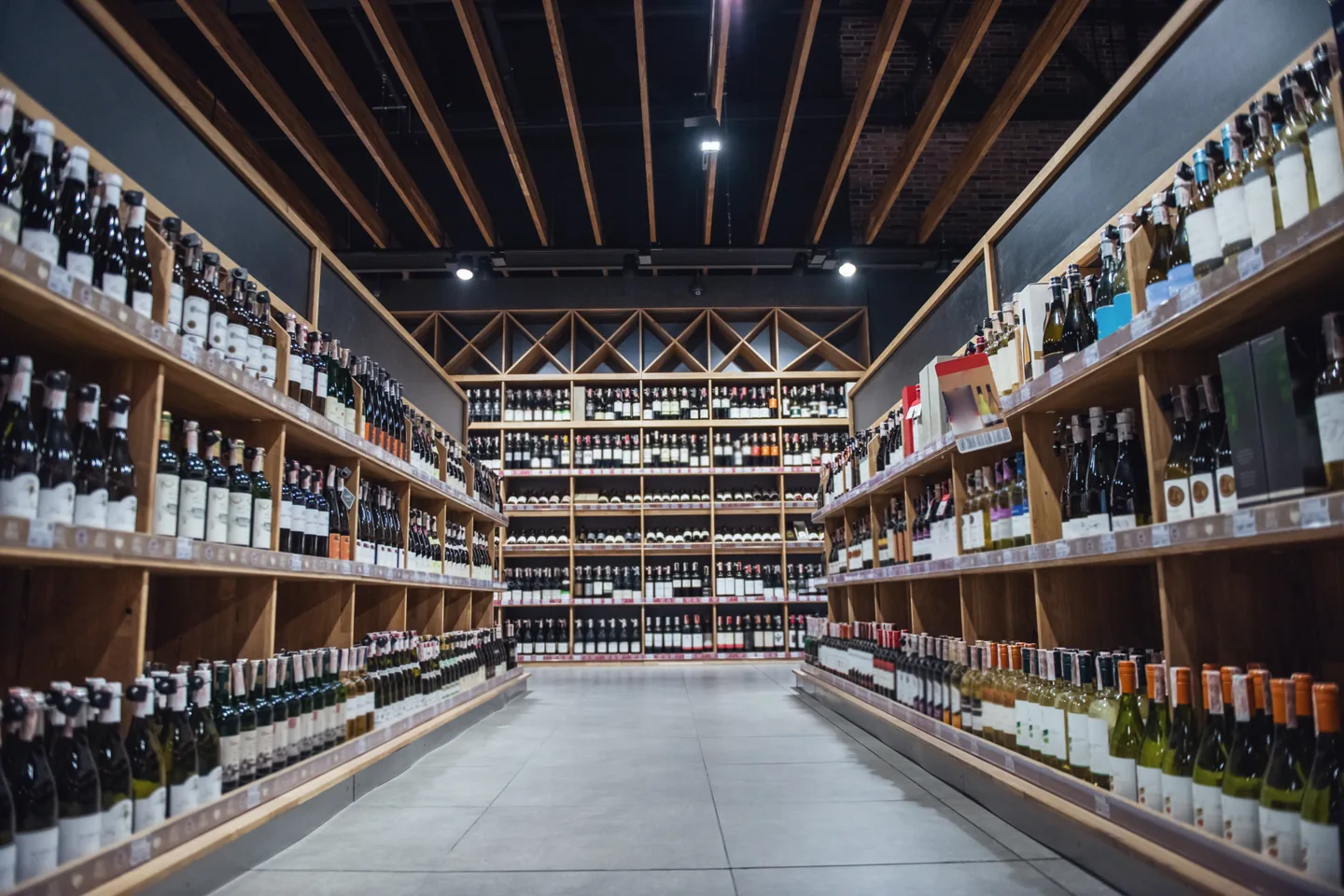

Before anything else about Utah, the structural fact: the state is in the business. Its commission may establish a state store, and may issue authority to act as a package agent or to operate a package agency. Its department is directed to purchase, store, keep for sale, sell and import alcoholic products, and to control their storage, sale and furnishing.
That single arrangement makes the Utah page different from every other state page on this site, because it changes who is reading it. There is no private package store here in the sense the rest of the country would recognise. The private off-premises business in Utah is an off-premise beer retailer, holding a local licence — and the state’s own liability statute has something remarkable to say about exactly that class.
What a control state makes you
Start with what is not yours. Packaged liquor and wine move through state stores and package agencies, under a department that buys and sells them. The cost of goods, the range, the allocation and the supply chain on that side of the trade are administered rather than negotiated.
What is yours is a beer business, licensed locally. The statute provides that a local authority may, subject to the rest of the title, issue, suspend and revoke a local licence to sell beer at retail for off-premise consumption — and, in the same breath, that a local authority may tax or prohibit the retail sale of beer.
Read that last clause twice. The power to prohibit sits with the local authority, above your
business, in the same sentence that grants the licensing power. It means a Utah site question
is a local question first: not what does Utah allow
but what has this city or
county decided
. Anyone planning a second location in this state should settle that before
signing anything.
From an insurance standpoint the consequences are concrete. Your stock is beer, so contents values and theft profiles look different from a spirits-carrying store in a licence state. Your licence is local, so a relocation is a local application. And the exposure that dominates the class elsewhere — liability arising from a sale — is governed here by a section that mentions your licence class by name.
The exemption, and what it is not
Utah’s Alcoholic Product Liability Act makes a person who commercially provides an alcoholic product liable for injury and damage, in the circumstances the section sets out, where the provision caused the intoxication of an underage, apparently intoxicated or interdicted individual.
Then comes the subsection that matters to this page. The section does not apply to a business licensed in accordance with the Off-Premise Beer Retailer Act to sell beer at retail only for off-premise consumption.
That is an unusual thing to find in a statute and it is genuinely valuable. It is also the single most over-read sentence in Utah alcohol law, so here is what it does not do.
It does not describe every store. The exemption is conditioned three times over: on beer, on retail, and on only for off-premise consumption. A business whose trade does not match that description is not standing inside it, and the burden of matching the description is yours rather than a court’s.
It does not pay for a defence. An exemption is something you establish, and establishing it happens inside a process that costs money whichever way it ends. Defence cost is where a great many liquor files actually spend, and no subsection reimburses it. What a liquor liability policy answers for — including the defence — is set out on its own page.
It does not reach claims outside that section. A fall in your aisle, a collision involving a delivery vehicle, a staff injury in the stockroom: none of these has anything to do with the Alcoholic Product Liability Act, and none of them is touched by an exemption from it.
Compensation cover, and three different counters
A Utah employer secures the payment of workers compensation benefits for employees by insuring, and keeping insured, that payment with an insurer authorised under the Insurance Code to transact the business of workers compensation in the state — with division-approved self-insurance as the alternative the same section describes. The practical effect for a store with staff is that the line is marketed with everything else rather than assigned. Once a Utah store puts someone behind a register, workers compensation is the next read.
Insurance is regulated by the Utah Insurance Department. Licensing questions go to the Utah Department of Alcoholic Beverage Services (DABS) and to your local authority; insurance questions — a carrier, a form, a claim — go to the department that regulates insurance. Keeping the three straight saves time at exactly the moment you have none.
One question about the local beer licence stays unanswered here: whether it carries an insurance condition. The chapter creating the class and the chapter carrying the liability section were both read, and neither imposes one — which is a finding about what we opened, not a provision declaring none exists. Only the second of those would be publishable. Your local authority is the place to put it.
What Utah liquor store insurance costs
No premium ranges. The more useful thing is what actually moves a Utah submission, and the weighting here is genuinely different from a licence state.
Stock profile leads, because a beer-led inventory is a different contents and theft picture from a spirits-led one — lower unit values, higher volume, more cold storage. Refrigeration capacity and its maintenance record follow directly from that. Then the building and its climate exposure, which ranges from desert heat in the south to hard freeze in the northern valleys. Then hours, the age-check procedure and retention. Then delivery, which in this state can mean genuine distance. Loss history closes it, read in context.
Common Utah liquor store risks
Climate splits the state into two property problems. In the south, heat runs refrigeration plant continuously and rooftop condensers take direct sun for months, so mechanical breakdown and the spoilage behind it is the live exposure. In the north, freeze is the mirror image: heat lost over a cold weekend destroys the stock and leaves the structure standing, and a beer-led inventory is the most freeze-vulnerable stock in the trade. Premises, inventory and crime are rated together under property rather than bought separately.
Snow load and ice reach roofs and entrances along the Wasatch, and meltwater tracked in from a lot is the commonest slip claim in the class for months at a time. Seismic exposure is the one most often left out of a conversation about a Wasatch Front property, and shelving full of glass is not a neutral contents risk in that context.
Distance is the third strand. A Moab or a southern-Utah store resupplies over real mileage, and a delivery vehicle on those routes is exposed in a way a Salt Lake round is not. The vehicle sits on commercial auto, and in this state the road is a larger share of the exposure than the traffic on it.
Common Utah liquor store claims we see
Premises files lead the count. Winter entrances along the Wasatch. Case displays going over — heavier and more frequent in a beer-led store than in a spirits one. Lot incidents on shared pads. Staff injuries lifting cases in stockrooms sized for less volume than the business now moves. These are general liability claims, and nothing in the Utah exemption reaches them: that form’s alcohol exclusion is still the reason a liquor policy sits beside it.
Property files run to refrigeration breakdown and spoilage, heat-aged roofs in the south, freeze and snow load in the north, and burglary aimed at the stockroom rather than the shelf.
And the files that test the exemption. A store whose trade does not match the description in that subsection — or which is alleged not to match it — is arguing about whether the section applies before anyone argues about what happened. That argument is a defence cost. Where the primary limits stop, an umbrella is what decides whether one contested file ends the business.
Major Utah liquor store markets
Salt Lake City and the Wasatch Front
The state’s densest retail concentration, with modern pad-site units along the I-15 spine and older storefronts in the central neighbourhoods. Winter inversion and freeze-thaw cycles reach roofs and entrances, and transaction volume makes the age check a continuous operation rather than an occasional one.
Park City and the Wasatch Back resorts
A resort economy whose customer base is almost entirely from out of state and whose staff turn over with the season. Two effects on the same submission: identification formats arriving from everywhere, and a register worked by people a few shifts into the job during the highest-volume weeks of the year.
Provo, Orem and Utah Valley
A very large resident student population with a distinctive consumption profile, which changes what a store stocks and therefore what it has at risk. The age-check question is at the centre of daily operation here rather than at its edge, and written procedure is what an underwriter asks to see first.
St. George and Washington County
Desert heat is the property story: refrigeration plant and rooftop condensers run continuously through a long summer and fail at the least convenient moment, taking cold stock with them. A fast-growing retail base along I-15 also means newer buildings, which usually improves the property section of a programme.
Ogden and the I-15 / I-84 junction
An older industrial-city retail stock with a through-trade from two interstates. Converted units raise wiring and service-capacity questions for refrigeration added long after the building went up, and the lot carries more weight than it does in a central-city storefront.
Moab and the canyon-country gateway
A visitor town a long way from anywhere, so resupply is a genuine logistics exercise rather than an errand and a delivery vehicle covers real distance on remote roads. Business interruption is also sharper here: a store this isolated cannot lean on a neighbouring branch when it closes.
Logan and Cache Valley
A university town in a cold valley, which combines a student catchment with a genuine freeze exposure. A stockroom heated only as an afterthought is a total loss of bottled inventory over one hard weekend, and that is a property claim that has nothing to do with anybody’s licence.
Why Utah liquor store owners choose Liquor Store Guard Insurance
Because Utah is the state where a national template is most likely to be wrong about the basics. A template built for a package store describes a business that does not exist here. A template that has heard about the exemption tends to over-read it. The useful position is in between: a narrow statutory exposure, a genuinely different stock profile, an unusual local licensing layer, and a full set of ordinary retail exposures that no exemption touches. How those pieces assemble into one policy schedule is described on the liquor store insurance page.
Every Utah statement above came off a le.utah.gov statute file or the department’s own site during this run. The exemption in particular is quoted rather than characterised, because a paraphrase of that subsection is exactly how it gets over-read.
Outside the Utah system
Every state on Utah’s border runs a private package trade, so a store crossing one of those lines is entering a different business rather than an extension of this one:
How each Utah claim on this page was verified
Each statement above traces to one field below. The dram-shop row is worded around the exemption because that is the part of the section describing this licence class — and the prose above is careful that an exemption from one section never reads as immunity from all of them.
| Claim on this page | Entry field | Primary source | Status |
|---|---|---|---|
| The commission establishes state stores; the department sells and imports | control_state | le.utah.gov | Verified |
| A local licence to sell beer at retail for off-premise consumption | off_premises_licence_class | le.utah.gov | Verified |
| The liability section exempts a Chapter 7 off-premise beer retailer | dram_shop_statute | le.utah.gov | Verified |
| The state alcoholic beverage department and its commission | abc_agency | abs.utah.gov | Verified |
| Compensation secured with an insurer authorised under the Insurance Code | wc_posture | le.utah.gov | Verified |
| The state insurance regulator | doi | insurance.utah.gov | Verified |
| Any insurance condition on the licence — NOT STATED on this page | liability_insurance_required | no source recorded | Not verified |
The federal layer, and where it stops
Federal law reaches a package store as a dealer rather than as a seller. 27 CFR Part 31 requires a retail dealer in liquors to register at every place of business. The insurance consequence sits in the recordkeeping. Section 31.181 requires retail dealers to keep records of receipt, which is the documentation a property claim on stock is built on. In Utah the licence itself comes from the Utah Department of Alcoholic Beverage Services, and the federal registration is separate from it — neither one satisfies the other.
Related reading
Utah liquor store insurance FAQs
Can a private store in Utah sell packaged spirits?
Not in the way a package store does elsewhere. The commission establishes state stores and issues authority to act as a package agent or operate a package agency, and the department purchases, stores, keeps for sale, sells and imports alcoholic products. Packaged liquor and wine move through that channel. The private off-premises class is a beer class.
What licence does a Utah off-premise beer retailer hold?
A local one. The statute provides that a local authority may, subject to the rest of the title, issue, suspend and revoke a local licence to sell beer at retail for off-premise consumption. The authority that matters to your store is therefore municipal or county, which is a different starting point from a statewide counter.
Can a Utah local authority stop beer being sold at all?
The same provision says a local authority may tax or prohibit the retail sale of beer. That is a striking amount of power to sit above a retail business, and it means a site question in Utah is a local question before it is a commercial one. Ask about the specific place, not about the state.
Does Utah’s Alcoholic Product Liability Act apply to my store?
The section carries a subsection providing that it does not apply to a business licensed under the Off-Premise Beer Retailer Act to sell beer at retail only for off-premise consumption. Read the description carefully: it is conditioned on beer, on retail, and on off-premise only. A business that does not match it is not inside the exemption.
Does that exemption mean liquor liability cover is unnecessary?
No, and treating it that way is the commonest mistake made with a favourable statute. An exemption from one section says nothing about what defending a claim costs, nothing about claims brought outside that section, and nothing about a business whose trade does not match the description the exemption uses. It narrows exposure; it does not remove it.
How does workers compensation work for a Utah store with staff?
The statute requires an employer to secure the payment of workers compensation benefits, and the first method it names is insuring and keeping insured that payment with an insurer authorised under the Insurance Code to transact the business of workers compensation in the state. Division-approved self-insurance is the alternative the same section describes.