
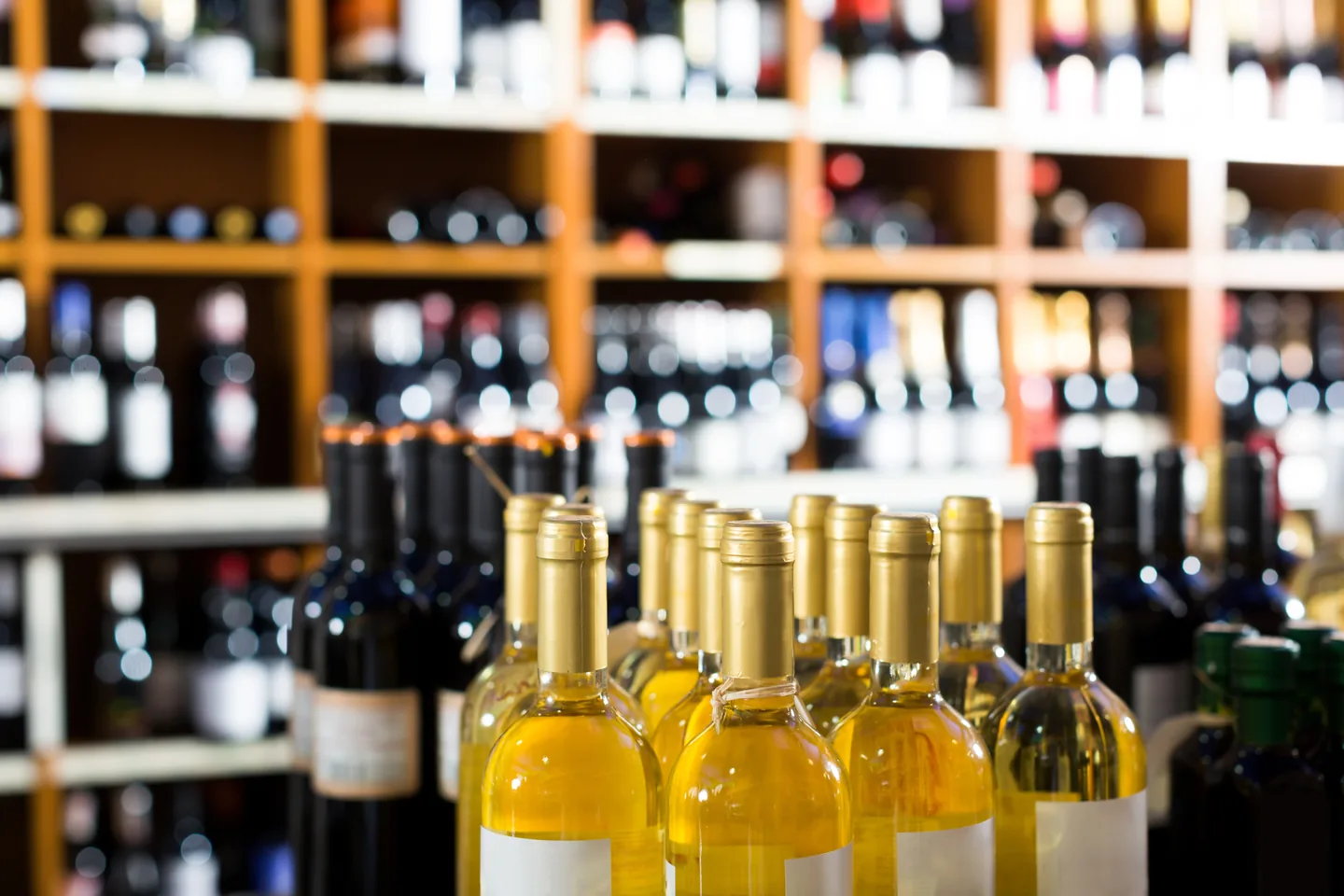

Maine does not call its off-premises class a package store or a liquor store. It calls it an agency liquor store, and the word in the middle is not decorative. It describes a relationship with the State that shapes the supply chain, and it sits at the top of this page because it is the fact that makes Maine Maine.
The agency liquor store licence
The statutory definition is short enough to quote almost whole: an agency liquor store means a person licensed by the bureau to sell spirits, wine and malt liquor to be consumed off the premises. Three product categories under one class, and one condition attached to all of them.
Look at the grammar of that definition before moving past it. An agency liquor store means a person that is licensed by the bureau. The defined term describes a licensee, not a building, and the off-premises condition attaches to the selling rather than to an address. Most insurance schedules are organised the other way round, around a location, so reconciling the two descriptions is a real step on a Maine submission rather than a formality. The entity named on the licence, the entity named on the policy and the address printed on both should add up to one account of one business.
Two things the definition does not do are worth naming while it is open. It sets out this class and says nothing about whether other off-premises arrangements sit alongside it, so an owner selling a narrower range should not read it as the whole map. And it says nothing about the terms on which the licence is held, renewed or transferred. Those answers live with the bureau rather than in the definition.
That condition — to be consumed off the premises — does more for your insurance programme than any other clause in the licence. Nothing is opened in the building. No customer becomes intoxicated on your floor. The hazard being priced is a retail hazard carrying an alcohol overlay, not a hospitality hazard, and the difference shows up in the liability section of every quote you will see. What the rest of the programme contains is on the liquor store insurance page.
Licensing and enforcement both sit with the Maine Bureau of Alcoholic Beverages and Lottery Operations, which describes enforcement and the licensing of all liquor licensees in the state as its own responsibility. One body, two functions — worth knowing when a compliance question and a licence question arrive in the same week. Note the width of that claim as well: all liquor licensees, not the agency class alone. Whatever the bureau learns about how a store trades, it learns as the body that also decides whether the store keeps trading.
The State is in the spirits business, and you are its retail partner
Maine’s legislature has recorded, in the statute itself, a policy of continuing to maximise growth in the State’s wholesale spirits business, and a finding that contracting out the operations of that business serves the policy and provides the State’s agency liquor store partners with effective and efficient services.
Read that as a commercial fact rather than a constitutional one. Your spirits supply runs through an arrangement the State owns and has contracted out, and the statute describes your store as a partner in it. That is a different position from a store in a fully private wholesale market, and it has practical consequences: pricing and product availability are less negotiable, stock arrives on terms set upstream, and the value sitting on your shelves at any moment is less within your control than an owner in a licence state would expect.
For insurance, the consequence is in the property section. Stock value drives the limit, and a limit set from a season when the shelves were thin is a limit that fails in the season when they are full. Inventory sits with the building and the crime cover on the property side of a programme, and stock is the part most often set once and never revisited.
One boundary, stated rather than glossed over. What that purpose clause establishes is the State wholesale spirits business and the contracting of its operations. It says nothing about how malt liquor and wine reach your shelves, and no source settling that question was read for this page. The description above therefore applies to the spirits half of your inventory, and the arrangement governing the other half is not something this page will tell you.
The purpose clause, and the half of it that happens at your counter
The statement of purpose has two halves, and the second is the one that gets dropped when this section is summarised. The Legislature finds it in the public interest to continue to maximise growth in the State wholesale spirits business — and, in the same sentence, while ensuring that growth in revenue from the business is achieved in a socially responsible manner. Growth, conditioned. The section is headed for wholesale spirits activities and marketing, so how the product is promoted sits inside the contracted arrangement as well as how it is supplied.
An agency liquor store is where that second half is actually performed. A condition on revenue growth is written at wholesale level, but nothing at wholesale level ever declines a sale. Declining happens at a register, in the few seconds a licensee has to look at a person and a document, and the statute calls the stores the State agency liquor store partners rather than its customers. Take the word partner as a description of position rather than warmth: state revenue and a licensee’s judgement across the counter run through the same transaction.
Which is why the section below is not a separate subject from this one. Whatever a store keeps in order to stand behind the socially responsible half of that purpose — a written check, a training record, footage retained long enough to be useful — is the same material that answers a negligence question later. One set of records does both jobs. A store treating compliance and defence as two files is keeping two copies of one thing, usually to different standards.
Negligent service, and the standard section 2506 sets
Maine’s liquor liability chapter contains a section that puts the standard in plain words. A server who negligently serves liquor to a minor is liable for damages proximately caused by that minor’s consumption of the liquor. A server who negligently serves liquor to a visibly intoxicated individual is liable for damages proximately caused by that individual’s consumption.
The word to notice is negligently. Several states set the bar at wilful and knowing conduct, which is a hard thing to prove and a comfortable thing for a defendant to sit behind. Negligence is an ordinary-care standard. It asks what a reasonable person in that position would have done, and the answer to that question is usually found in whatever written procedure and training records the business can produce.
The section runs in two subsections and they ask different questions. The first turns on who the person was — a minor — which is a status a document settles. The second turns on how the person appeared — a visibly intoxicated individual — which only observation settles. Those are answered out of different material: the first from whatever the check produced and retained, the second from what the person at the register saw and what anyone else can say about it months afterwards.
The adverb in the second subsection deserves a moment on its own. It does not say intoxicated. It says visibly intoxicated, keying the provision to what was apparent rather than to what happened to be true, and that cuts in both directions. It does not reach a condition nobody could have seen. It plainly does reach one that everybody could.
Both subsections then route the damages the same way, and it is not the way most people paraphrase them. Liability is for damages proximately caused by that person’s consumption of the liquor — not by the sale of it. The chain a claimant traces therefore runs from a negligent service, through a consumption, to a harm, and the middle link is something that happened after the customer left the building. What the quoted section does not carry is equally worth stating plainly: no damages cap, no limitation period, no notice requirement and no defence. None of those is asserted here, and nothing is said about the rest of the chapter, whose other sections were not read for this page.
One honest caveat, and it matters. The section speaks of a server. Whether and how that defined term reaches an off-premises seller of sealed containers is a definitional question the section itself does not settle, and no answer to it was obtained in this research. This page therefore does not tell you that you are inside the section, and it does not tell you that you are outside it. Read the chapter at the source linked below, and in the meantime plan around the standard rather than around an assumption about the definition. What a liquor liability form actually answers for — including defence, which is where these files spend money — is set out separately.
What this page does not say is whether Maine attaches any insurance or financial responsibility condition to the licence itself. No operative clause doing so was located in the research, and a clause that was not found is not the same thing as a clause that does not exist. The bureau is the body to ask.
Compensation for Maine staff: policy or self-insurance
The compensation act states that every private employer, including an independent contractor who hires and pays employees, is subject to the Act and must secure the payment of compensation for all employees either by purchasing a workers compensation policy or by self-insuring as the Act provides. Two routes are named, which means the line can be looked at properly rather than simply accepted. What that line covers once a store has staff is on the workers compensation page.
Three phrases in that sentence do the work. Every private employer — stated at large, with no occupational list anywhere in these words. Including an independent contractor who hires and pays employees — an expansion clause, which reaches someone who is themselves engaged as a contractor but has staff of their own, and which is worth knowing for a store that puts delivery or shelf work out to a person who does not work alone. And with respect to all employees, which as written draws no line at hours worked.
That last phrase is where the Maine season meets the Maine statute. A store whose rota swells between June and September is adding employees, and the sentence covers them in precisely the terms it covers the manager who has been there for years. A payroll figure built from the quiet months is the most ordinary way a Maine compensation file ends up wrong when it is audited.
Of the two routes named, the second is defined elsewhere: self-insurance is to be done as set out in another section, which was not read for this page. Practically that makes purchase the route nearly every agency store is describing, and it makes self-insurance a regime whose entry requirements sit somewhere other than in the sentence that mentions it. Naming both is accurate; treating them as equally available without reading the second would not be.
The insurer and the policy are regulated by the Maine Bureau of Insurance, which is not the body that issues your licence. Two agencies, two kinds of question. The insurance bureau describes its own job as regulating the insurance industry to protect and serve the people of the state — that is, it is pointed at the party writing the paper, not at the licensee buying it, which is why a dispute about how a policy responded belongs there and a dispute about a licence does not.
What moves the cost of a Maine programme
No premium ranges appear here. The inputs are more useful, and in Maine several of them are seasonal in a way they are not further south.
Sales mix sits at the top, and the agency licence puts all three product categories in play at once. Season comes next: a trade that triples between June and September changes both the stock value at risk and the training level of the person holding the register. Identification procedure, written and trained before a new hire works alone, matters more in a seasonal staffing model than in a settled one. Building age and heating plant are the property variables, and in the mill towns they dominate. Delivery distance is the auto variable, and north of Bangor it is a real one. The vehicle sits on commercial auto whatever the season.
Risks a Maine store carries through the year
Winter is the property story and it is not a small one. Every item of inventory in this trade is a bottle of liquid, and a heating failure in an unattended building over a cold weekend is a stock loss, a clean-up and an interruption all at once. Frozen and burst pipework in an older building does more damage than the weather that caused it. Refrigeration running through a humid summer is the other half of the same problem in reverse.
The claims that have nothing to do with alcohol still arrive more often than the ones that do: ice and melt tracked in from the lot, a display that came down, a fall in the aisle. Those are general liability claims, and the exclusion that policy carries for alcohol is why the liquor form is written as a separate instrument.
Major Maine liquor store markets
Portland and the working waterfront
Brick and timber buildings of considerable age, many of them sharing party walls, put the property conversation into construction and restoration before it gets anywhere near stock value. The Old Port trade also runs late and draws a visiting crowd, which raises both the frequency of the age check and the share of unfamiliar identification formats crossing the counter on a summer weekend.
Bar Harbor and the Acadia season
A trade that swells and collapses with the park season is a staffing story before it is a sales story. Seasonal hires work registers with the least training and the shortest tenure, which is exactly where a documented identification procedure earns its keep. Off season, a closed or barely staffed building in a hard winter turns the exposure from liability to freeze and burst pipework.
Bangor and the road north
Stores here serve a catchment far larger than the city, so delivery and customer travel both run long distances on roads that are winter roads for a good part of the year. Commercial auto carries more weight in the programme than it does on the coast, and a delivery fleet that is one van and one owner is a different underwriting question from a fleet with rotating drivers.
Lewiston and Auburn mill stock
Converted mill and tenement buildings mean older wiring, older heating plant and floor loading never designed for palletised stock. Where a purpose-built suburban unit raises liability questions first, a converted mill raises property ones — a boiler that gives out during a hard freeze destroys the inventory well ahead of the fabric, and in this trade the inventory is the whole of the bottled stock.
Kittery and the border approaches
Being first across a state line changes the customer mix rather than the licence: more out-of-state identification, more one-off visitors, more traffic in and out of a lot at the busiest hours. Lot exposure and the condition of the surface between the door and the car matter more here than in a store whose custom walks in from the surrounding streets.
Augusta, Waterville and the central corridor
The central corridor is year-round trade rather than seasonal, which changes the shape of the programme more than its size. Without a summer peak to staff for, a store here runs a settled crew and a steadier book, and the underwriting weight moves from turnover toward the building and the lot. Winter delivery mileage along the I-95 spine is the exposure that grows, and commercial auto does proportionally more work than it does on the coast.
How each Maine claim on this page was verified
The prose above was written from these rows, not summarised into them afterwards. A row that is not verified is a row the page was obliged to stay quiet about, and it did.
| Claim on this page | Entry field | Primary source | Status |
|---|---|---|---|
| The agency liquor store class and its off-premises condition | off_premises_licence_class | legislature.maine.gov | Verified |
| The State wholesale spirits business and its contracted operations | control_state | legislature.maine.gov | Verified |
| Licensing and enforcement sit with the state alcohol bureau | abc_agency | www.maine.gov | Verified |
| The negligent-service standard in section 2506 | dram_shop_statute | legislature.maine.gov | Verified |
| No licence-level insurance condition was established | liability_insurance_required | no source recorded | Not verified |
| Compensation secured by policy or by self-insurance | wc_posture | legislature.maine.gov | Verified |
| The state insurance regulator | doi | www.maine.gov | Verified |
Across the New England line
The federal layer, and where it stops
There is a federal registration behind every state licence. 27 CFR Part 31 covers alcohol beverage dealers, and a retail dealer registers for each premises it operates. Section 31.181 is the part an owner meets after a loss: retail dealers keep records of receipt, and a claim on stock is only as good as that trail. In Maine the licence itself comes from the Maine Bureau of Alcoholic Beverages and Lottery Operations, Department of Administrative and Financial Services, and the federal registration is separate from it — neither one satisfies the other.
Related reading
Maine liquor store insurance FAQs
What is an agency liquor store in Maine?
The statute defines it as a person licensed by the bureau to sell spirits, wine and malt liquor to be consumed off the premises. That last phrase is the one that decides the shape of an insurance programme: nothing is opened or consumed in your building, so the file is rated as retail with an alcohol overlay rather than as hospitality. The licence itself reaches all three product categories.
Is Maine a control state?
For spirits, the State is in the business. The legislature records a policy of continuing to grow the State wholesale spirits business and states that contracting out its operations serves that purpose, describing agency liquor stores as the State partners that the arrangement serves. So your spirits supply runs through an arrangement the State owns, which is a materially different commercial position from a fully private wholesale chain.
What does Maine’s negligent-service section say?
Section 2506 says a server who negligently serves liquor to a minor is liable for damages proximately caused by that minor’s consumption, and that a server who negligently serves a visibly intoxicated individual is liable for damages proximately caused by that individual’s consumption. Note the standard: negligence, not the wilful-and-knowing bar some states set. That is a lower threshold than many owners assume.
Does that section apply to a store selling sealed bottles?
The quoted text turns on the word “server”, and how that defined term reaches an off-premises seller is a definitional question the section itself does not settle. This page will not guess at it. Read the chapter at the link in the table below, and treat the negligence standard as the thing to plan around rather than as a question already answered in your favour.
How does a Maine store secure workers compensation?
The statute says every private employer, including an independent contractor who hires and pays employees, is subject to the Act and must secure the payment of compensation for all employees by purchasing a workers compensation policy or by self-insuring as the Act sets out. Two routes, both of which can be looked at, which is the practical difference from a state where coverage comes from one place only.
Does Maine require an agency liquor store to carry liquor liability insurance?
This page does not answer that, because no operative clause conditioning the licence on insurance or financial responsibility was located in the research and an unverified answer is worse than none. The bureau that issues the licence is the body to ask. The table below lists what was tried and what each source did and did not establish, so you can see the shape of the gap rather than take our word for it.