
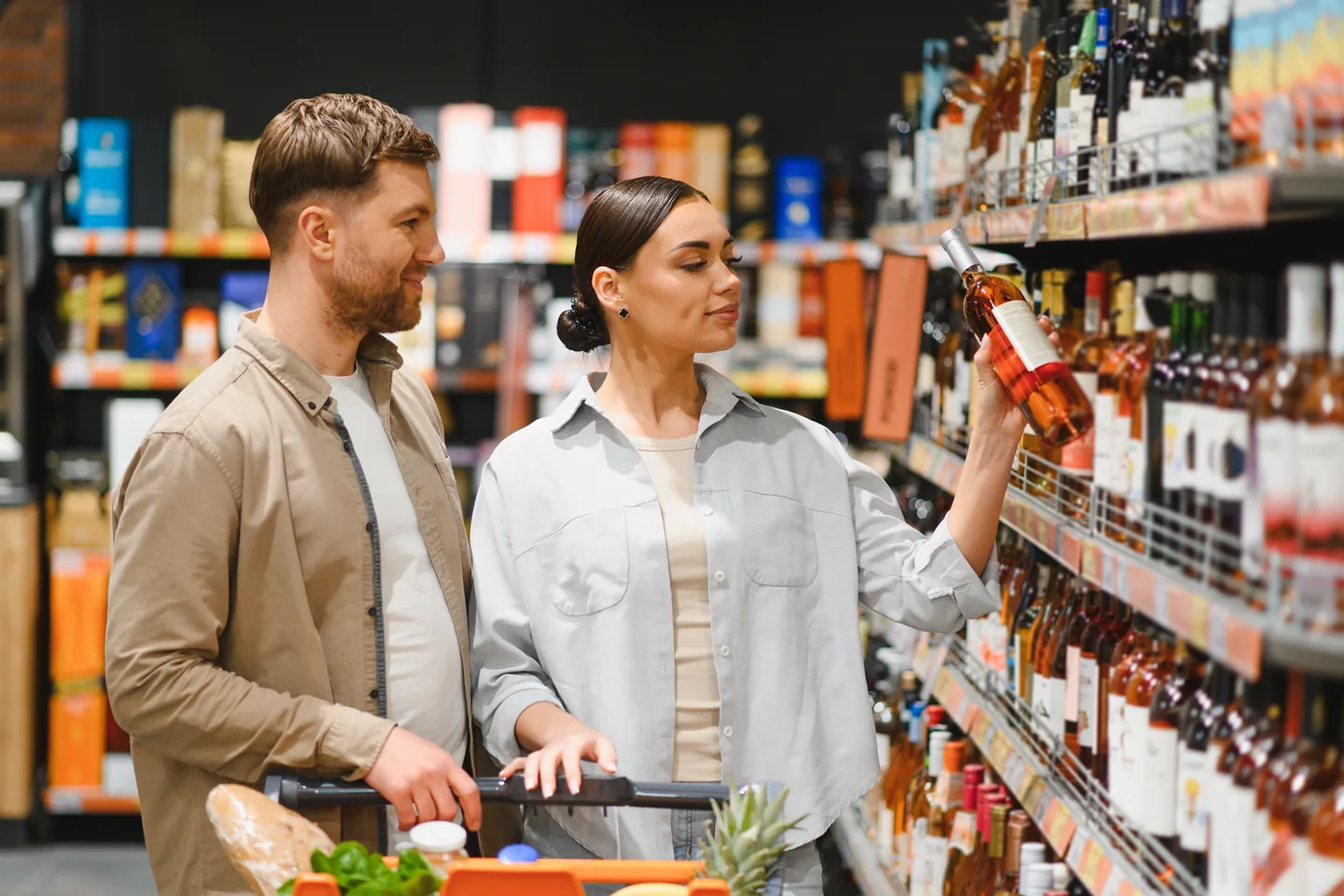
Insurance for in-store wine tastings is one of the few questions in this trade where owners tend to ask us afterwards rather than beforehand. The event goes well, everybody is pleasant, a few cases move, and the question arrives a week later as an afterthought: that was fine, wasn’t it?
Usually it was fine, in the sense that nothing happened. But a tasting is not a slightly livelier version of ordinary trading. It takes a business whose entire legal and insurance identity is built on alcohol leaving the building unopened, and it opens a container inside the building. Every document describing your store — the licence, the policy, and in some places the statute that protects you — was drafted on the assumption that this does not happen.
Insurance for in-store wine tastings starts with what your policy thinks you do
A policy is not underwritten on an address. It is underwritten on a description of what the business does, and that description is the frame every later question is answered inside.
The description for an off-premises retailer is built around a simple pattern: sealed containers, sold across a counter, consumed somewhere else by somebody who is no longer your responsibility by the time they open them. Rates, limits, conditions and the questions an underwriter bothered to ask all follow from that pattern. Nobody asked about pouring procedure, because nobody was told there would be pouring.
Open a container for sampling and the pattern breaks in the one place the whole structure rests on. That does not mean a claim would be refused, and it is not a reason to abandon tastings — plenty of stores run them and run them well. It means the activity sits outside what was described, and something outside the description is a question rather than an answer.
The fix is administrative and dull: tell whoever placed the policy what you intend to do, before you do it, and get the response in writing. That is the whole of the practical advice on this page, and everything below explains why it earns its place.
How tightly a protection can be tied to off-premise status
It is easy to treat the off-premises label as a piece of trade vocabulary. In places it is load-bearing statutory language, and a protection can be attached directly to it.
Utah writes its provision on liability for injuries resulting from the distribution of alcoholic products at section 32B-15-201, and the part worth reading is what the section says about its own reach:
“32B-15-201 Liability for injuries and damage resulting from distribution of alcoholic products — Prima facie evidence. (1)(a) … a person described in Subsection (1)(b) is liable for: (i) any and all injury and damage, except punitive damages to: (A) a third person … (3) This section does not apply to a business licensed in accordance with Chapter 7, Off-Premise Beer Retailer Act, to sell beer at retail only for off-premise consumption.”
Read the last sentence slowly. The carve-out is not granted to a shop, or to a category of owner, or to a kind of building. It is granted to a business licensed to sell at retail only for off-premise consumption. The protection is defined by where the product is consumed and by the terms of the licence held.
We are not going to tell you what a court would do with that sentence when the facts include a container opened in the store, because that is a question for a lawyer with the file in front of them, and it is not something we can answer from a statute alone. What we will say is that the sentence is built out of exactly the words a tasting puts pressure on, and that an owner relying on a protection of this shape should know what it is resting on. Our Utah page sets out the state detail.
The wider lesson travels further than one state. Where legislatures have drawn lines for alcohol sellers, they have frequently drawn them along the consumption boundary, because that is the boundary the licensing system already uses. An activity that steps across it is stepping across something load-bearing.
What actually changes on the day
Set the paperwork aside for a moment and look at the shift itself, because the exposure changes in ways that have nothing to do with wording.
You are now watching people drink. In ordinary trading your staff see a customer for the length of a transaction, and the only judgement to make is whether to complete a sale. During a tasting, the same staff are pouring repeatedly to the same people over a period, which creates a running judgement about when somebody has had enough and who is going to say so. That is a service judgement, and service judgements are assessed on observation and timing. What our liquor liability page describes about how these claims are argued becomes far more directly relevant to your store on a tasting afternoon than on any other day.
The people stay. Ordinary customers move through the building. At a tasting they stand around in it, in a space laid out for browsing rather than gathering, while somebody is carrying open glassware past stacked cases. That is an ordinary premises exposure and it belongs with your general liability cover, but it is a premises exposure at a density your store was not built for.
Glass, floors and clearing up. Open containers get knocked over. A spill on a hard floor in a crowded aisle, cleaned up while the event is still running, is the most predictable incident of the day and the easiest to prepare for.
Age checking gets harder, not easier. A moving group, a busy counter and staff with their hands full is a worse setting for identification than a quiet register, and it is the setting in which sampling is offered. A store with a disciplined procedure at the till can find that the procedure simply does not survive contact with an event, because the procedure assumed one person, one transaction and both hands free. Deciding in advance who checks, and at what point in the afternoon, is the difference between a control and an intention.
Everything gets recorded differently, or not at all. Ordinary trading leaves a trail: a receipt, a time, a line on a report. Sampling leaves nothing unless somebody decides it should. If a question is asked afterwards about who was poured what and when they stopped, the answer exists only if a person was writing it down while the event was running.
Somebody else may be pouring. Where a representative from a supplier runs the table, the arrangement needs looking at from both directions. Another party being present does not remove your store from the facts, and the question of whose cover responds is one to settle before the date rather than afterwards.
The questions worth asking before the next one
Ask whether your licence class permits consumption on the premises at all, or whether a separate permission is required, because that is a licensing question and it is answered by your state rather than by your policy.
Ask whether the description of operations on your policy mentions sampling, and if it does not, ask for it to be corrected rather than assuming the omission is harmless.
Ask who is responsible for pouring, and who is authorised to stop. A named person with authority is worth more than a policy on the subject.
Ask what happens to anybody who should not drive, and decide it in advance, in daylight, rather than at the end of an event.
None of that is exotic. It is the same discipline you already apply at the register, applied to an activity your register procedure was never designed to cover.
Before you schedule
A tasting is a good thing for a store to run. It sells product, it builds a reason to come back, and it is one of the few advantages a physical shop has. Nothing here argues against it. What it argues against is running one on the assumption that a policy written around sealed containers leaving the building has already thought about the afternoon you are planning.
The liquor store insurance overview sets out how the agreements in a package fit together. When you have a date in mind, start a quote or send us the current declarations page and the plan for the event, and we will tell you what has to change before the first container is opened.
Frequently asked questions
Do I need special insurance for in-store wine tastings?
You need your existing cover checked against an activity it may not have been written for. A tasting introduces consumption at the place of sale, which is the fact an off-premises policy description assumes away. Whether an endorsement, a separate permit or simply a corrected description of operations is needed is a question to settle with the underwriter beforehand.
Does a tasting change my liquor liability exposure?
It changes its shape. In ordinary trading you are judged on a brief transaction at a register. During a tasting you are pouring, watching people drink in front of you over a period, and making judgements about when somebody has had enough. That is a service exposure, and it is assessed on facts your usual operation never produces.
Will my policy simply cover a tasting because it happens in my store?
Location is not the test. A policy is underwritten on a description of what the business does, and an off-premises retailer’s description generally contemplates sealed containers leaving the building. An activity outside that description is not automatically inside the cover, and discovering the answer during a claim is the expensive way to find out.
What should I ask before running a tasting?
Ask whether your licence or a separate permit allows consumption on the premises, whether the description of operations on your policy covers sampling, whether anybody else involved brings their own cover, and who is responsible for pouring and for stopping. Get the answers in writing from whoever placed the policy, before the date is set.
Does a distributor representative pouring at my store take the exposure away?
Not on its own. Somebody else being present does not remove your store from the facts, and it is your building, your licence and your staff clearing up afterwards. Where another party is involved, their cover and yours both need looking at, and the arrangement should be described to your underwriter rather than assumed to be somebody else’s problem.
About the author
