
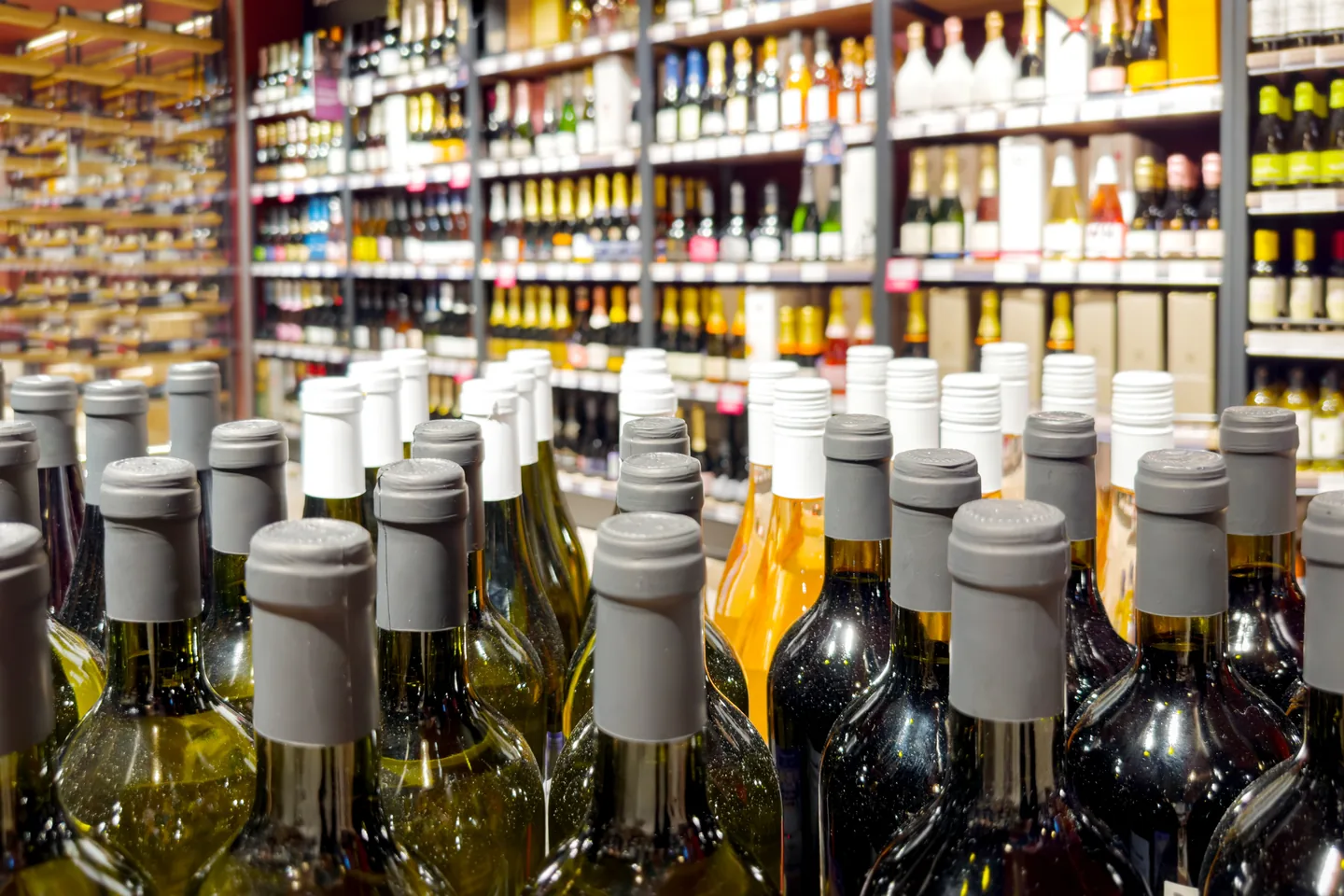

Wyoming arranges the alcohol trade in a way that would look odd almost anywhere else. One state office both distributes the liquor and administers the control laws, the retail licence does not ask where the bottle is opened, and the statute that limits a seller’s liability contains a sentence that takes the limit away again in defined circumstances. Three unusual facts, and all three land on the insurance file.
Your supplier and your regulator are the same office
The Wyoming Liquor Division describes its own mission as a dual one: providing wholesale distribution services, and administering the alcoholic beverage control laws for the citizens of the state. Those are two jobs that most states put in two buildings.
The statute reinforces the first half. It preserves what it calls the division’s exclusive authority to wholesale alcoholic liquors, and that phrase is the code’s own. For a retailer the practical effect is commercial rather than legal. Pricing and availability on that part of the shelf are set upstream. Stock arrives on terms you did not negotiate. And the value standing in your building at any given moment moves for reasons outside your control, which is exactly the variable a property limit is supposed to track.
The advice that follows is dull and worth taking: review the stock limit against what is actually on the shelf rather than against what was there when the policy was written. Inventory, structure and theft belong to the same part of the property side of a programme, and stock is the line most often set once and then left.
One retail licence, and it does not ask where the bottle is opened
The statute describes the retail liquor licence as the authority under which a licensee is permitted to sell alcoholic liquor or malt beverages for use or consumption but not for resale, except as that section otherwise provides.
Read the middle of that sentence again. For use or consumption — with no clause separating consumption on the premises from consumption somewhere else. The licence text quoted here does not draw the on-premises line that most states draw inside the class itself, which means the class alone cannot tell an underwriter what kind of business is being rated.
That puts the burden on your submission rather than on your licence. A store selling sealed containers for consumption elsewhere should say so in terms, because a file described only by its Wyoming licence class leaves the underwriter to price for the wider of two very different operations — and the wider of two operations is always the dearer. The lines a take-away trade needs, and why, are listed on the liquor store insurance page.
A limitation of liability, and the sentence that reopens it
Wyoming’s section is written as a limitation rather than as a grant of a claim, and it has three parts worth taking in order. No person who has legally provided alcoholic liquor or malt beverage to another person is liable for damages caused by that other person’s intoxication. The section does not affect the liability of the intoxicated person themselves. And — this is the part to read twice — the section does not affect the liability of the licensee where the alcoholic liquor or malt beverage was sold or provided in violation of the title.
So the protection is conditional, and the condition is your own compliance. The word doing the work in the first limb is legally. A sale that broke the title is not a legally provided sale, and the third limb says so expressly rather than leaving it to be argued.
That has a direct operational consequence, and it is the most useful thing on this page. In a state with a wilful-and-knowing civil standard, procedure is evidence. In Wyoming, procedure is the thing the limitation itself hangs on. A documented identification routine, training completed before a new hire works a register alone, and footage retained long enough to show what happened are not merely helpful in defending a claim here — they are what keeps the sale inside the category the statute protects. What a liquor liability form answers for — including the cost of defending a claim, which no limitation clause reduces — is set out separately.
Whether Wyoming attaches any insurance or financial responsibility condition to a licence is not stated on this page. No clause imposing or excepting one was obtained in the research, and the note against that field is explicit that this is reported as unverified rather than as a confident no. The division is the body to ask.
Workers compensation and the registration clause
The clause read for this page says that an employer subject to the act shall not commence business or engage in work in the state without applying for coverage under the act and receiving a statement of coverage from the division. One route is named in that sentence, and it runs through the state division rather than through a policy bought in a market.
Two honest limits on what that establishes. The clause governs an employer subject to the act, and whether a package store is such an employer is a scope question the sentence does not answer — it sits in the act’s own description of covered employment, which was not read here. And a clause that names one route is not, by itself, proof that no other exists elsewhere in the act. This page therefore tells you what the registration clause requires and stops short of characterising the Wyoming system. Whether a Wyoming store falls inside the compulsory class is a question for the division; workers compensation describes the line itself.
The carrier and the contract answer to the Wyoming Department of Insurance instead. Send a policy or rate question there, and a licence or statement-of-coverage question to the division.
Where a Wyoming premium is decided
No premium ranges appear on this site. The inputs matter more, and in Wyoming the first of them is unusual: compliance procedure, because the statutory limitation is conditional on it rather than merely informed by it.
After that, geography does most of the work. Distance between towns, which turns restocking and delivery into road operations and puts real weight on the vehicle line. The vehicle itself sits on commercial auto however long the route. Winter conditions and pass closures, which are an interruption question as much as a road one. Stock value and how far it swings, given that a good part of the shelf arrives on terms set upstream. Building age and heating plant, because an entire inventory of bottled liquid, and a building that loses its heat on a January night ruins the inventory long before it damages the structure around it. And the age-check routine, which in a university town is tested nightly.
Freeze, wind and the ordinary aisle claim
Freeze leads the property file and it is not a marginal peril here. A heating failure in an unattended building produces burst pipework, a ruined inventory, a clean-up and an interruption arriving together. Wind is the second, reaching roofs and rooftop plant on exposed sites. Refrigeration breakdown is the constant: an equipment claim and a spoilage claim in one file.
The claims that arrive most often have nothing to do with alcohol and nothing in title twelve touches them: ice and melt tracked in from the lot, a fall in the aisle, a display that came down, an injury on the surface between the door and the vehicle. Those are general liability claims, and that policy’s exclusion for alcohol liability is why a second form has to sit alongside it.
Major Wyoming liquor store markets
Cheyenne where the interstates cross
Two major freight corridors meeting in one city produces a trade that is part settled residential and part passing traffic, and the passing half brings identification from everywhere. It also means a store here is more likely to sit on a highway-adjacent pad with a large lot, which shifts weight toward the surface between the door and the vehicle rather than toward the storefront.
Jackson and the Teton season
A resort trade with inventory values per bottle far above the state norm, a visiting customer base, and a workforce that turns over with the season. High unit values turn theft and breakage into a per-incident question rather than a volume one. Winter access and the condition of mountain routes make any delivery operation a materially different risk from a Front Range equivalent.
Casper and the energy trade
A trade that follows an industrial employment cycle, with demand that moves on a schedule the store does not control. The practical consequence is stock planning: value under the roof swings, and a limit set in a slow quarter does not answer a loss in a busy one. Older commercial building stock in the core pushes the property conversation toward wiring, roof age and refrigeration plant.
Gillette and the Powder River Basin towns
Catchments measured in counties rather than blocks, so restocking and any delivery operation are genuine road work. One vehicle out of service stops trade rather than slowing it, and emergency response distances are long enough to matter for how a fire loss develops before anyone arrives. Commercial auto carries proportionally more of a programme here than anywhere else in the state.
Laramie, the university and the pass
A resident student population puts the age check at the centre of daily operation and makes staff turnover a rated variable rather than background noise. The interstate over the pass closes in winter often enough to be planned for, which turns a restocking assumption into a business interruption question and makes on-hand stock depth part of the risk picture.
Sheridan and the Bighorn foothills
Sheridan sits where an interstate, a ranching economy and a summer route into the Bighorns meet, so the trade shifts from settled local business to travelling business and back inside the year. Distance is the other variable: a store here is a long way from any alternative, which makes a delivery route longer and an outage harder to cover from a neighbouring unit. Both point the programme toward commercial auto and toward carrying the stock line properly.
How each Wyoming claim on this page was verified
These rows are where the page came from. Two of them carry a verified badge for a sentence narrower than the field value claimed, and the prose above followed the sentence — which is the whole point of printing both.
| Claim on this page | Entry field | Primary source | Status |
|---|---|---|---|
| The division’s dual mission: wholesale distribution and administration | abc_agency | liquor365.wyo.gov | Verified |
| The division’s exclusive authority to wholesale alcoholic liquors | control_state | www.wyoleg.gov | Verified |
| The retail liquor licence: sale for use or consumption, not resale | off_premises_licence_class | www.wyoleg.gov | Verified |
| A limitation of liability, disapplied where the sale broke the title | dram_shop_statute | www.wyoleg.gov | Verified |
| An employer subject to the act applies to the division for coverage | wc_posture | www.wyoleg.gov | Verified |
| Any licence-level insurance condition — not stated on this page | liability_insurance_required | no source recorded | Not verified |
| The state insurance regulator | doi | doi.wyo.gov | Verified |
States on the Wyoming line
The federal layer, and where it stops
Federal law reaches a package store as a dealer rather than as a seller. 27 CFR Part 31 requires a retail dealer in liquors to register at every place of business. The insurance consequence sits in the recordkeeping. Section 31.181 requires retail dealers to keep records of receipt, which is the documentation a property claim on stock is built on. In Wyoming the licence itself comes from the Wyoming Liquor Division, Wyoming Department of Revenue, and the federal registration is separate from it — neither one satisfies the other.
Related reading
Wyoming liquor store insurance FAQs
Who regulates liquor in Wyoming?
The Wyoming Liquor Division describes its own mission as a dual one: providing wholesale distribution services, and administering the alcoholic beverage control laws for the citizens of the state. So the office that supplies a substantial part of your stock is also the office that administers the rules you trade under. That is an unusual arrangement and it is worth understanding before a compliance question arises.
Does the state control the wholesale tier?
For alcoholic liquors, the statute preserves what it calls the division’s exclusive authority to wholesale them. That is the phrase the code uses. For a retailer the consequence is commercial rather than legal: pricing and availability on that part of the shelf are set upstream, and the value sitting in your building at any given moment is less within your control than in a fully private market.
What does a Wyoming retail liquor licence authorise?
The statute describes it as the authority under which a licensee is permitted to sell alcoholic liquor or malt beverages for use or consumption but not for resale, except as the same section otherwise provides. Note what that sentence does not do: it does not distinguish between consumption on the premises and consumption elsewhere. The licence text alone will not tell an underwriter which business you run.
Is Wyoming a state where a store cannot be sued over a sale?
No, and the statute itself is why. It says no person who has legally provided alcohol is liable for damages caused by the other person’s intoxication — and then says expressly that the section does not affect the liability of a licensee where the alcohol was sold or provided in violation of the title. The protection is conditional on the sale being a lawful one, which puts your compliance record at the centre of it.
How does Wyoming workers compensation work for a store?
The clause read for this page says an employer subject to the act must not commence business or engage in work in the state without applying for coverage under the act and receiving a statement of coverage from the division. Note the words “subject to this act”: whether a package store is such an employer is a scope question the clause does not answer, and this page will not guess at it.
Does Wyoming require a liquor store to carry liquor liability insurance?
This page does not answer that. No clause imposing or excepting such a requirement was obtained in this run, and the research note is explicit that this is reported as unverified rather than as a confident no. The liquor division is the body to ask. The trace table below lists every source that was tried, so you can see the shape of the gap rather than take a summary on trust.