
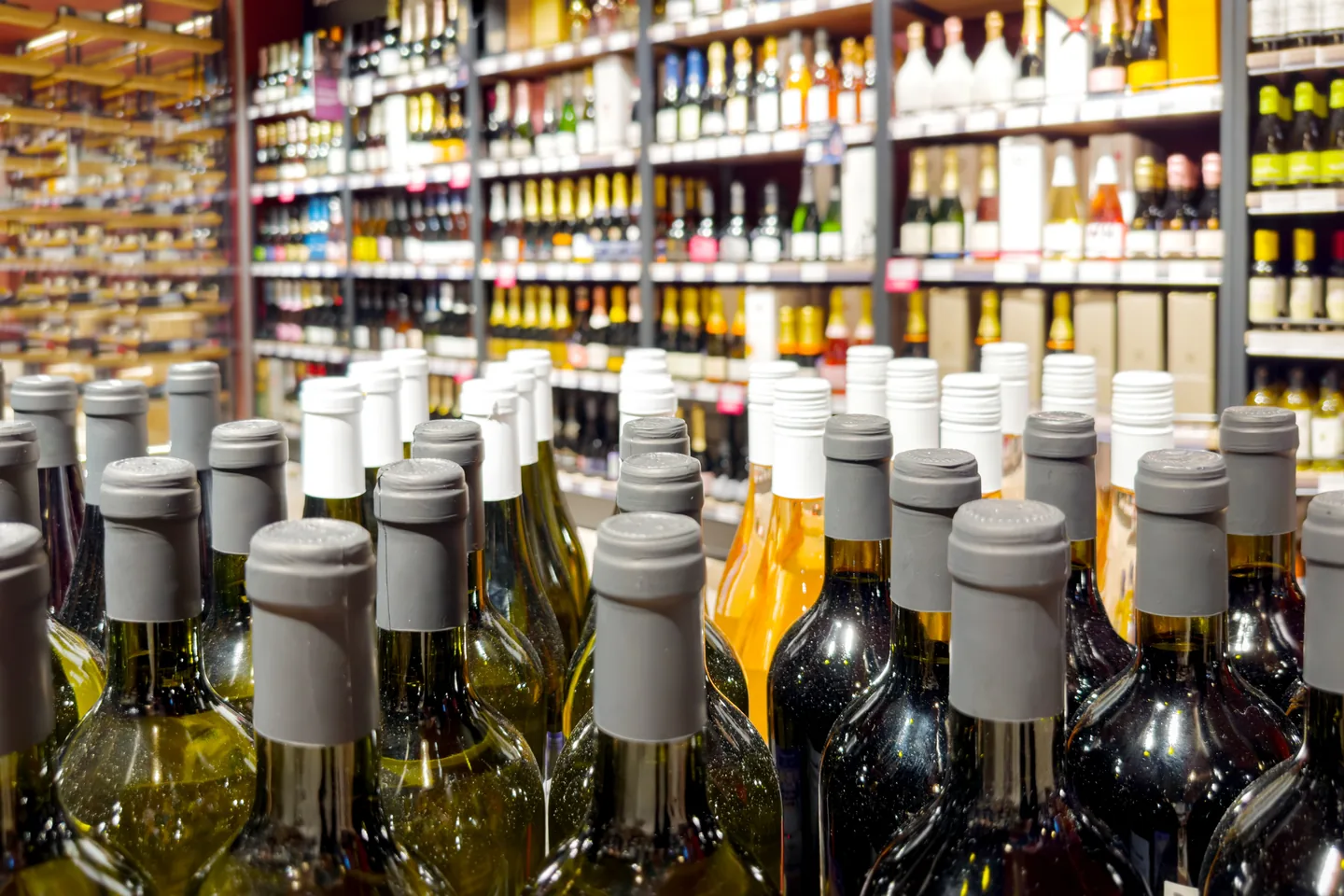

Almost every phrase in this trade means something slightly different in Pennsylvania. A liquor store is an institution the Commonwealth itself operates. A private off-premises business is licensed around a narrower product range and around a named place. And the liability section is written as a prohibition with a single, carefully worded exception. A programme assembled without knowing which of those applies to you will be wrong in ways that only surface on a claim.
The Commonwealth is the liquor retailer
The statute is unambiguous. The board shall establish, operate and maintain, at such places throughout the Commonwealth as it deems essential and advisable, stores to be known as Pennsylvania Liquor Stores, for the sale of liquor and alcohol in accordance with the act and the regulations made under it.
That single sentence sets the shape of the private trade here. The state is not merely regulating the market on the liquor side; it is operating in it. An owner reading national guidance about what a liquor store sells, how it is stocked and what its inventory is worth is reading about a business that does not exist in this Commonwealth in the form described.
Above the private licence sits Pennsylvania Liquor Control Board (PLCB), which both operates the state stores and issues the licences. One body, two very different functions, and it is worth knowing which hat it is wearing when you write to it.
What the distributor licence actually covers
The private off-premises class is a distributor or importing distributor licence. The statute says the board shall issue one to any reputable person who applies and pays the prescribed fee, for the place which that person desires to maintain for the sale of malt or brewed beverages, not for consumption on the premises where sold.
Two features of that sentence carry underwriting weight. The first is the product scope: malt or brewed beverages. That is a different inventory profile from a spirits-led store — lower unit values, far higher volume and weight, more refrigeration, more handling, more pallets and more manual lifting. It shifts the risk conversation toward stock movement, employee injury and refrigeration breakdown, and away from the high-value theft picture a spirits wall produces. How the property section treats refrigerated stock and plant is therefore a larger question here than it is in a licence state.
The second is that the licence is issued for the place the applicant desires to maintain. The permission is tied to premises, which makes a relocation, an expansion or a change of tenancy a licensing event rather than an administrative one — and makes the premises itself a bigger part of what you are insuring than the phrase business insurance usually implies.
Section 497 and the visibly intoxicated predicate
The liability section reads as a bar first and an exception second, which is the reverse of how most states draft it. No licensee shall be liable to third persons on account of damages inflicted upon them off the licensed premises by customers of the licensee — unless the customer who inflicts the damages was sold, furnished or given liquor or malt or brewed beverages by the licensee or its agent, servant or employee when that customer was visibly intoxicated.
Everything turns on two words. Visibly makes the test observational rather than forensic: it is about what could be seen at the counter, not what a blood test established afterwards. And the timing — when the customer was visibly intoxicated — anchors it to the moment of the transaction rather than to the state the person reached later that evening.
An observational test is answered by observational evidence, and that evidence is yours to have or to lack. Camera coverage of the till at the angle that shows a face rather than a hand. Retention that outlives the months between an incident and a demand. A refusal log kept as routine, which is worth more than any recollection because it demonstrates that refusals happen at all. What the liquor liability form answers for, and where defence costs sit relative to the limit, is the other half of this.
Note also the breadth of the verbs — sold, furnished or given — and the reach to an agent, servant or employee. A promotion, a sample or a gift is inside that language, and the individual who handed it over is inside it alongside the business.
The one condition we could not pin down
Whether the licence itself is conditioned on carrying liquor liability cover was searched and not resolved. The licensing section and the board pages produced no operative clause, and an absence of finding is not a finding of absence. So this page makes no claim in either direction, and the board is the body to put it to.
What does not wait on that answer is the exposure. Section 497 states a route by which a licensee becomes answerable to a third person, and it does so whether or not any mandate accompanies it. Where no state floor exists, the limit has to be set from the exposure instead. For a business with staff, a delivery vehicle and premises open late, that conversation usually ends at whether an umbrella belongs above the primary lines.
Two routes to workers compensation, and a third
The Commonwealth sets out the options plainly: an employer may obtain workers compensation insurance through a licensed insurance carrier or through a state-operated insurance fund, and may instead apply to the bureau for approval to self-insure its liability.
This site does not name carriers, including funds, so the useful part is the structure rather than the roster. Pennsylvania is not a monopolistic state: a licensed carrier is a permitted route, which means the line can be marketed rather than merely administered. For a distributor business — heavy lifting, pallets, cold storage and vehicles — that is not a formality. Workers compensation is frequently the largest line on the programme here rather than an afterthought bolted to the end of it. The workers compensation page explains what that line pays for once a business runs a rota.
Policy questions go to Pennsylvania Insurance Department; licensing questions go to the board. Two different bodies for two different kinds of problem.
What Pennsylvania liquor store insurance costs
We do not publish premium ranges. The variables are more useful, and the Pennsylvania list is weighted differently from a spirits-led state.
Volume and weight come first, because they drive employee injury, handling loss and the condition of your floor. Refrigeration capacity and plant age follow, because a compressor failure attaches a spoilage claim to an equipment one and a beverage-led inventory is exactly the stock that spoils. Then trading hours and the character of the last hour, and the identification and refusal procedure that covers it — written down, rehearsed with whoever opens, and recorded well enough to survive an observational test raised months later. Delivery adds a vehicle and a doorstep. Premises age varies enormously between a rowhouse frontage and a suburban unit. Loss and compliance history closes it out.
Common Pennsylvania liquor store claims we see
Employee injury is the line that surprises owners who arrive from a spirits-led state. Cases, kegs, pallets and cold rooms produce lifting injuries, crush injuries and falls on wet floors, and they do it at a frequency a shelf-stocking operation never sees.
Then the customer-facing ones. Falls at the door through a long winter of tracked-in melt. Stacked cases that come down. Injuries in a lot or on a pavement you share rather than control. general liability carries them, right up to the point alcohol is involved, which is where its exclusion starts.
On the property side: water and fire spreading through shared walls in the terraced frontages, valley flooding in the western river towns, roof and freeze exposure in the northern counties, and refrigeration breakdown everywhere. A delivery vehicle on a hill or a valley road sits on commercial auto; the doorstep transaction that closes the round is a separate question again.
Major Pennsylvania liquor store markets
Philadelphia and the rowhouse retail frontage
Narrow units in continuous terraces, shared party walls, occupied floors above and almost no dedicated parking. A fire or water loss here is rarely confined to one address, which changes the property conversation into a neighbouring-premises one, and the pavement rather than a lot is where a customer falls.
Pittsburgh and the river valleys
Hill topography, bridges and a street pattern that makes a short delivery route a long one in practice. Winter grade and ice do disproportionate work on the vehicle line here, and the building stock along the valley floors carries flood history that shows up in how the property section is written rather than in how it is priced alone.
The Lehigh Valley distribution corridor
A logistics economy on an interstate crossroads, which means a shift-working customer base arriving at hours a residential trade never sees, and a great deal of heavy vehicle traffic past the door. Late and early trading changes the staffing profile, and the staffing profile is what an underwriter is really reading when it asks about hours.
State College and the campus trade
A resident undergraduate population inside a compact centre, in a town whose population changes by a large multiple between term and vacation. Identification checking is continuous through term and the staff doing it turn over every semester, so procedure is permanently being taught to somebody new.
The Pocono resort belt
A weekend and seasonal trade drawn heavily from outside the Commonwealth, so out-of-state identification formats cross the counter constantly and every unfamiliar one is a slower, more error-prone check. Stock values swing hard between the season and the off-season, which is a declared-values question as much as a security one.
The northern tier counties
Long distances between towns on two-lane roads through a real winter, with a single outlet often serving a wide rural catchment. Delivery legs run long, the return leg after dark is where the claims come from, and a heating failure in a stock room over a cold weekend is a live freeze exposure rather than a theoretical one.
Why Pennsylvania liquor store owners choose Liquor Store Guard Insurance
Because a submission that describes a Pennsylvania distributor in the vocabulary of a package store will be underwritten as the wrong business. The inventory is heavier, the payroll works harder, the plant matters more and the licence is attached to an address. Those are four different rating conversations from the ones a licence-state store has. The programme itself, line by line, is laid out on the liquor store insurance page.
We read the Commonwealth’s own statute text rather than working from memory, which is why the table below links each claim to the document behind it and why one row reads as unproven rather than guessed at. A licensed agent reads the file and comes back with what the Pennsylvania markets will take.
Nearby states we also write
Pennsylvania borders six states and none of them operates its own stores. The pages read most often alongside this one:
How each Pennsylvania claim on this page was verified
Each claim names the field it came from, and each field links the statute PDF or board page behind it. One row is unproven, and it is displayed that way rather than tidied.
| Claim on this page | Entry field | Primary source | Status |
|---|---|---|---|
| The board establishes and operates the Commonwealth liquor stores | control_state | www.palegis.us | Verified |
| The private class is a distributor or importing distributor licence | off_premises_licence_class | www.palegis.us | Verified |
| Licensee liability turns on a visibly intoxicated customer | dram_shop_statute | www.palegis.us | Verified |
| Licensing sits with the state liquor control board | abc_agency | www.lcb.pa.gov | Verified |
| No licensing condition on liquor liability cover was established | liability_insurance_required | no source recorded | Not verified |
| Employee cover: a licensed carrier, a state fund, or approved self-insurance | wc_posture | www.pa.gov | Verified |
| The state insurance regulator | doi | www.pa.gov | Verified |
The federal layer, and where it stops
Federal law reaches a package store as a dealer rather than as a seller. 27 CFR Part 31 requires a retail dealer in liquors to register at every place of business. The insurance consequence sits in the recordkeeping. Section 31.181 requires retail dealers to keep records of receipt, which is the documentation a property claim on stock is built on. In Pennsylvania the licence itself comes from the Pennsylvania Liquor Control Board, and the federal registration is separate from it — neither one satisfies the other.
Related reading
Pennsylvania liquor store insurance FAQs
Does Pennsylvania run its own liquor stores?
Yes, and the statute says so directly. The board shall establish, operate and maintain stores, known as Pennsylvania Liquor Stores, at such places throughout the Commonwealth as it deems essential and advisable, for the sale of liquor and alcohol under the act. That is a genuine control structure rather than a licence structure, and it shapes what a private licensee can sell.
What does a distributor licence let me sell?
Malt or brewed beverages, not for consumption on the premises where sold. The statute says the board shall issue a distributor or importing distributor licence to a reputable person who applies and pays the fee, for the place that person wishes to maintain for that sale. Your licence is written around the place as much as around the product.
When is a Pennsylvania licensee liable to a third person?
The section is written as a bar with one opening. No licensee is liable to third persons for damages inflicted off the licensed premises by customers, unless the customer who inflicted the damage was sold, furnished or given liquor or malt or brewed beverages by the licensee or its agent, servant or employee when that customer was visibly intoxicated.
What does visibly intoxicated mean in practice for my staff?
It puts the whole question at the counter at the moment of the transaction, on what was observable then. Not what was discovered later, and not what a customer admitted afterwards. Because the test is about what was visible, the evidence that answers it is visual: camera coverage of the till, retention long enough to outlive a delay, and a written refusal log.
Does Pennsylvania require a distributor to carry liquor liability cover?
We did not establish that either way. The licensing section and the board pages were searched and produced no operative insurance condition, and not finding a clause is not proof there is none. The board issues your licence, so the board can answer it. Note that the liability section above exists whether or not a mandate accompanies it.
How is workers compensation obtained in Pennsylvania?
Through one of three routes. An employer may obtain cover from a licensed insurance carrier, or from a state-operated insurance fund, or apply to the bureau for approval to self-insure its liability. The practical point for an owner is that the line is marketable rather than administered, so it belongs in the same submission as everything else.