
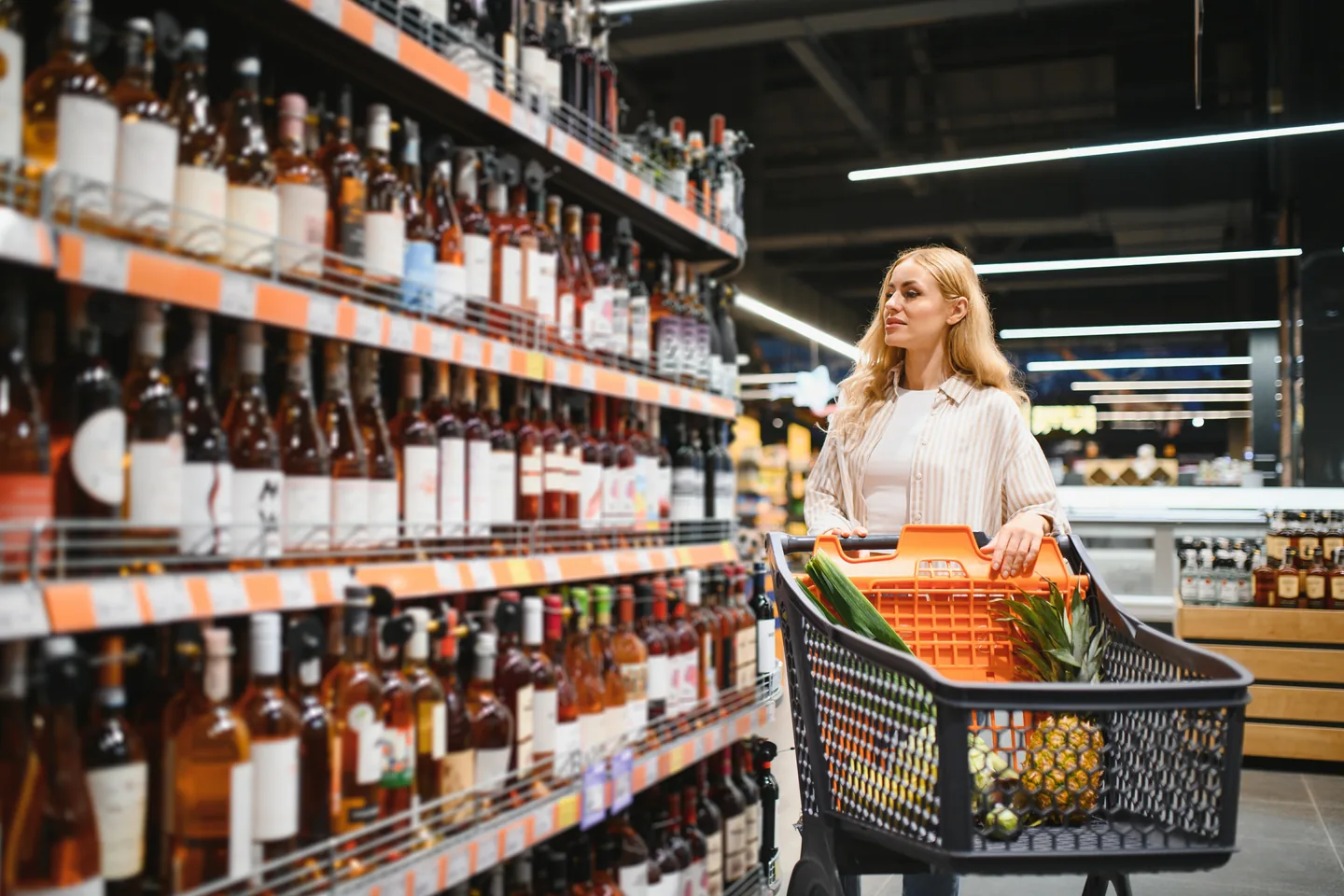

Michigan does something few states do: it puts a private business inside the state distribution function without taking the business private. That structural choice is written into the definitions section of the liquor code, and it is where a Michigan insurance conversation should start rather than where it usually ends up.
Michigan sells spirits through your shop
The definition is precise and worth reading slowly. A specially designated distributor is a person engaged in an established business, licensed by the commission, to distribute spirits in the original package for the commission for consumption off the premises.
For the commission is the phrase that separates Michigan from an ordinary licence state. On the spirits side you are not simply a retailer who bought stock and marked it up; the statute describes the function as distribution carried out on the commission behalf. Original package carries the same weight it does elsewhere — nothing opened, nothing served — and off the premises puts your exposure at the transaction rather than across an evening.
There is a practical consequence for how a property loss is handled. Stock arriving through a documented state channel is stock with a documented value and a documented trail, which makes quantifying a fire, freeze or burglary loss considerably less contentious than it is in a state where the whole shelf came through private hands. The inverse is also true: an interruption in that channel is a supply event, not an insured one, and no property form converts it.
Two permits, two different businesses
Alongside the distributor definition sits a second one. A specially designated merchant is a person to whom the commission grants a licence to sell beer, wine or mixed spirit drink at retail for consumption off the licensed premises. That is a retail sale in the ordinary sense, and it is a different permission over a different set of products.
Most stores of any size hold both, which means one building trades under two statutory characters at the same counter. For insurance the relevance is that the two sides of the shelf do not behave alike. Spirits concentrate value in a small footprint and drive the theft and the stock-valuation conversation. Beer and wine drive volume, refrigeration and handling. An underwriter who is told only the total inventory figure has been told the least useful version of a Michigan store. Which of those the property section is actually rating is worth settling before renewal rather than after a loss.
Both permits come from Michigan Liquor Control Commission (within the Department of Licensing and Regulatory Affairs), which sits inside the state department responsible for licensing and regulatory affairs. One licensor, two definitions.
The Dramshop Act, and what has to be proven
Michigan writes its civil action into the liquor code rather than leaving it to common law. An individual who suffers damage, or is personally injured, by a minor or by a visibly intoxicated person — by reason of the unlawful selling, giving or furnishing of alcoholic liquor to that person — has a right of action in their own name against the person who, by selling, giving or furnishing the liquor, caused or contributed to the intoxication.
Three elements do the work. The sale, gift or furnishing has to be unlawful. It has to have gone to a minor, or to somebody who was visibly intoxicated. And the unlawful sale has to be proven to be a proximate cause of the damage, injury or death.
Proximate cause is the element owners under-rate. It is not a formality between the sale and the claim; it is a contested question decided on evidence, and the evidence that decides it is nearly always yours. Till time against incident time. Camera coverage of the counter and the door. A refusal log that exists because somebody keeps it, not because somebody remembers it. What the liquor liability form answers for, and how defence costs sit relative to the limit, is the other half of the file.
Note also who the section reaches: the person who sold, gave or furnished. That is a wider set of verbs than selling alone, and a store running tastings, promotions or staff-handled samples of any kind should be clear about which of those verbs describes what happens on its floor.
The insurance condition we could not establish
Whether Michigan conditions either permit on carrying liquor liability cover was searched and not resolved. The dramshop section, the definitions section and the commission pages were all tried and none produced an operative condition. Failing to find a clause is not proof that none exists, so this page states nothing in either direction.
The route is the obvious one: the commission licenses you, so the commission can tell you what your permit requires. What does not depend on any mandate is the section above — a written right of action with two predicates and a causation test — and that is enough to drive a limit conversation without a state floor to anchor it to. Where the exposure rather than a mandate sets the limit, the question usually ends at whether an umbrella belongs above the primary lines.
Two routes to Michigan workers compensation, and no third
The statute gives two routes: insuring against liability with an insurer authorised to transact workers compensation insurance within the state, or self-insuring with the director authorisation. No state fund and no monopoly appears in the mechanism, so the line is marketable rather than administered. Injury to the person stocking the cooler belongs to workers compensation, a different policy entirely.
Policy questions belong with Michigan Department of Insurance and Financial Services (DIFS), which supervises insurance and financial services in the state. Permit questions belong with the liquor commission. Different buildings, different files, and an owner who sends one to the other loses a month.
What Michigan liquor store insurance costs
We publish no premium ranges. What is useful is the list of variables, and in Michigan the first of them is the split between your two permits — how much of the shelf and how much of the turnover sits on each side, because they carry different exposures.
After that: trading hours, and what the last hour of a weekend looks like at your counter. The identification and refusal procedure, written down and taught before a new hire is left alone with a register, with footage retained long enough to answer a proximate-cause argument raised months later. Delivery, which adds a vehicle and moves the check to a doorstep. Building age and heating resilience, which matter far more in the north than downstate. And the loss and compliance record, including the checks you passed.
Common Michigan liquor store claims we see
The dramshop file is decided on causation and on the state of the person at the counter, which means it is decided on your records. Stores with coverage of the till, retention that outlives a delay, and a refusal log defend those files. Stores without them negotiate from a position the statute never intended them to be in.
The volume claims are ordinary retail. Falls, worst from December to March when melt and salt come through the door for four months at a stretch. Stacked cases and end-caps that come down. Injuries in parking shared with other tenants. Those sit on general liability, and the alcohol exclusion inside that policy is precisely why a liquor form exists beside it.
On the property side Michigan runs to freeze and heating failure in the north, ice damming on older roofs, wind across the lower peninsula, and refrigeration breakdown that attaches a spoilage loss to an equipment one. Theft concentrates on the spirits wall, where the value is. A delivery van on a winter road sits on commercial auto, and the hand-off at the end of the route does not.
Major Michigan liquor store markets
The Detroit metro across Wayne, Oakland and Macomb
The densest licensed trade in the state, and the widest spread of store formats inside a short drive: corner units in pre-war blocks, strip-centre tenancies and standalone pads on arterial roads. Rating varies more within this metro than between some whole states, and the same owner with two sites often sees two very different property conversations.
Ann Arbor and the university district
A resident undergraduate population sitting on top of a compact retail core. The minor limb of the Dramshop Act is tested here more evenings than anywhere else in the state, so the identification procedure, the training record and the footage retention period are read before the shelf value is.
Grand Rapids and the western corridor
Newer retail formats on a growing corridor, generally purpose-built with their own parking, which usually rates better on the property side. The exposure shifts toward the lot, the trolleys and winter ice, and toward delivery vans that spend their day on arterial roads rather than motorways.
The Upper Peninsula
A single store may serve a catchment measured in townships, with the nearest alternative an hour away. Delivery legs run long across a genuinely severe winter, which puts more weight on the vehicle line than any downstate store carries, and heating failure in an outbuilding stock room is a live freeze exposure rather than a theoretical one.
Traverse City and the northern resort belt
A summer population that arrives, peaks and leaves, staffed by people who turn over with it. Procedure is always thinnest at a register worked by somebody three shifts into the job, and a seasonal trade makes that the normal state of the counter rather than the exception. Stock values also rise through the season on the wine wall.
The international crossings at Detroit and Port Huron
Border traffic means a clerk assesses identification formats issued outside the country as a routine part of the shift. Every unfamiliar document is a slower check with more room for a mistake, and that is an operational exposure an underwriter asks about before it becomes a claim anybody discusses.
Why Michigan liquor store owners choose Liquor Store Guard Insurance
Because a store holding two permits is two businesses for underwriting purposes and one business on the submission form, and a programme built from a national template will average them into something that fits neither. The spirits side and the beer side price differently, fail differently and get stolen from differently. The programme itself is described line by line on the liquor store insurance page.
We read the state’s own code rather than working from recollection, and where the code said less than we would have liked — as it did on the insurance condition — the page says less too. A licensed agent works the submission and reports back on what Michigan markets will write.
Nearby states we also write
Michigan borders three states and none of them structures the shelf this way. The pages read most often alongside this one:
How each Michigan claim on this page was verified
Each row names the field its claim came from, and each field links the code section behind it. Where a field value ran ahead of its own quotation, the quotation won.
| Claim on this page | Entry field | Primary source | Status |
|---|---|---|---|
| Spirits are distributed in the original package for the commission | control_state | www.legislature.mi.gov | Verified |
| Two permit definitions: one for spirits, one for beer, wine and mixed drink | off_premises_licence_class | www.legislature.mi.gov | Verified |
| The Dramshop Act creates a right of action on two predicates | dram_shop_statute | www.legislature.mi.gov | Verified |
| Licensing sits with the state liquor control commission | abc_agency | www.michigan.gov | Verified |
| No licensing condition on liquor liability cover was established | liability_insurance_required | no source recorded | Not verified |
| Employee cover: an authorised insurer, or director-approved self-insurance | wc_posture | www.legislature.mi.gov | Verified |
| The state insurance and financial services regulator | doi | www.michigan.gov | Verified |
The federal layer, and where it stops
Before any state licence question, there is a federal one. Under 27 CFR Part 31 a retail dealer in liquors registers with the TTB for every place of business it operates. It also sets a habit worth keeping for other reasons. Section 31.181 requires records of receipt from retail dealers, and that trail is what makes an inventory figure defensible after a fire or a theft. In Michigan the licence itself comes from the Michigan Liquor Control Commission, and the federal registration is separate from it — neither one satisfies the other.
Related reading
Michigan liquor store insurance FAQs
What does it mean that my store distributes spirits for the commission?
It is the statutory definition. A specially designated distributor is a person in an established business, licensed by the commission, to distribute spirits in the original package for the commission for consumption off the premises. You are selling in the original package and doing it on the commission behalf, which is a different footing from a shop that simply buys and resells.
What is the difference between the two Michigan permits?
They cover different products. The distributor permit is the spirits one, defined around distributing spirits in the original package for the commission. The merchant permit is granted by the commission to sell beer, wine or mixed spirit drink at retail for consumption off the licensed premises. Many stores hold both, which is why one building can sit under two definitions at once.
Who can sue my Michigan store under the Dramshop Act?
An individual who suffers damage or is personally injured by a minor or a visibly intoxicated person, where alcohol was unlawfully sold, given or furnished to that person. The claim runs against the person who by selling, giving or furnishing the liquor caused or contributed to the intoxication, and it is brought in the injured individual own name.
What has to be proven against my store?
Two things sit at the centre of the section. That the sale, gift or furnishing was unlawful, and that it went to a minor, or to somebody visibly intoxicated. Then the causal link: the unlawful sale has to be proven to be a proximate cause of the damage, injury or death. Proximate cause is a real hurdle and it is argued from evidence, not from recollection.
Does Michigan require a liquor store to carry liability insurance?
We did not establish that either way. The dramshop section, the definitions section and the commission pages were all searched and none produced a licensing condition on insurance. Because the commission licenses both permits, that is the body to ask. A state that requires nothing has not removed the exposure the Dramshop Act above creates.
How do I cover employees in Michigan?
Through the open market or through approved self-insurance. The statute allows an employer to insure against liability with an insurer authorised to transact workers compensation insurance within the state, or to self-insure with the director authorisation. There is no state monopoly in that mechanism, so the line can be marketed with the rest of your programme.