
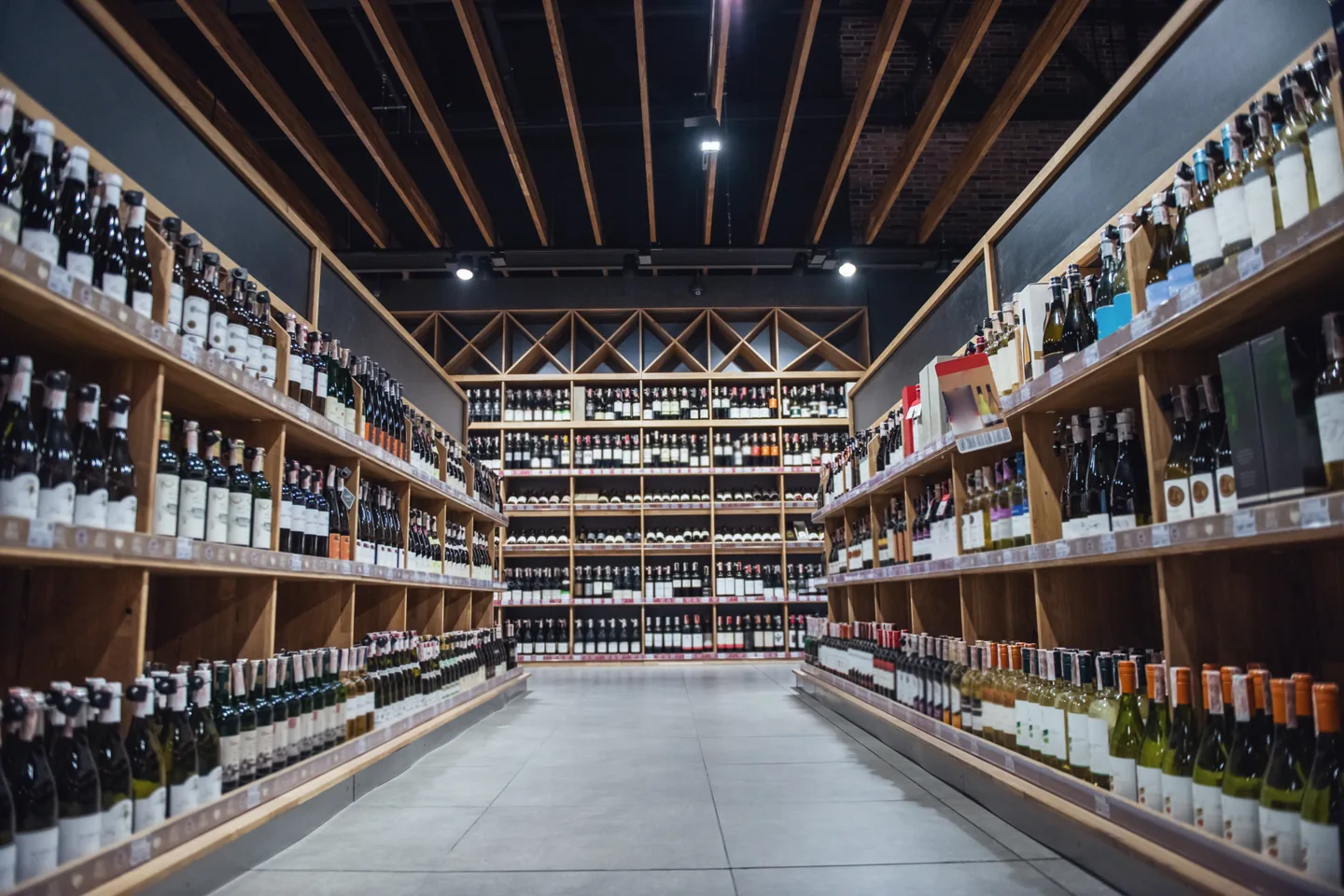

Most states leave seller liability to the courts. Connecticut wrote it into the liquor chapter, gave it a number, and left it there. That single drafting choice is the reason a Connecticut package store insures differently from a store one state line away, and it is the fact this page leads with rather than buries under a licensing summary.
The Dram Shop Act, and the number written next to it
The section is short enough to read in one breath. If any person sells alcoholic liquor to an intoxicated person, and that purchaser, in consequence of the intoxication, afterwards injures the person or property of another, the seller shall pay just damages to the person injured, up to the amount of two hundred fifty thousand dollars (Conn. Gen. Stat. § 30-102).
Three elements, and every one of them matters commercially. The sale has to be to somebody already intoxicated — the statute reaches the condition of the buyer at the counter, not the condition they reach later. The injury has to land on somebody else; the person who did the drinking is not the claimant the section describes. And the consequence has to follow from the intoxication rather than merely after it.
Then the figure. It is genuinely there in the text, and it is genuinely a ceiling on what the statute directs the seller to pay. What it is not is a ceiling on what the episode costs you. Defence expense is where a great many alcohol files actually spend money, and a ceiling on the award says nothing about the months of investigation, deposition and expert work in front of it. The liquor liability page sets out what the form answers for and how defence sits inside or outside the limit.
Nor does the section reach every way a package store gets sued. A customer who slips between your shelves, a display that comes down on somebody, a delivery van that finds the back of a queue on the parkway — none of those are Dram Shop claims, none of them are bounded by that figure, and all of them are ordinary retail exposures that an alcohol-focused reading of your programme can leave short.
What the package store permit lets you do
Connecticut licenses; it does not sell. The state operates no outlets and sits nowhere in your supply chain, which means your stock arrives through private channels and your relationship with Connecticut Department of Consumer Protection, Liquor Control Division is a permit relationship rather than a supplier one.
The class itself is the package store permit. The statute says it shall allow the retail sale of alcoholic liquor in sealed bottles or containers not to be consumed on the permit premises. Sealed, and not consumed here: those two conditions are why your general liability exposure looks like a retail shop rather than a bar, and why the alcohol part of the exposure sits at the moment of sale rather than across a whole evening of service.
The same section of the statute creates a separate grocery store beer permit for beer-only outlets. That is a different permit with different limits, and an owner who holds one should not read a package store answer as their own.
The department that issues the permit can also revoke or suspend it and order the forfeiture of moneys paid. Permit jeopardy is not itself an insurance claim, but it belongs in the same file as one: the compliance record that keeps a permit is the same record that answers a Dram Shop allegation, and stores that keep it well are in a materially different position from stores relying on somebody remembering a Friday.
Where the insurance question actually gets answered
This is the part of the Connecticut picture we will not pretend to have settled. The liquor chapter was read through looking for a clause conditioning a package store permit on liability cover, and none was located. That is not the same as proving that no such condition exists anywhere in the regulatory stack, and it is certainly not a basis for telling you that Connecticut requires nothing.
So the honest answer is a routing instruction rather than a finding: the body that issues and disciplines your permit is the department named above, and a question about what your permit requires you to carry belongs with them. What this page can tell you is the part that does not depend on any requirement at all — a state that does not compel cover has not removed the exposure the cover answers, and the Dram Shop section above is written proof of that.
There is a practical consequence for how the programme is built. Where a state mandate exists, it tends to set a floor that owners then treat as an answer. Where none is established, the limit conversation has to be driven by the exposure instead — what the statute can award, what defending it costs, and what sits above both. That last part is what an umbrella is for, and it is a more useful conversation in a state like this one than a mandate would be.
Covering the people who work the counter
Connecticut runs an open workers compensation market. An employer that does not furnish the chairperson of the Workers Compensation Commission with satisfactory proof of its solvency and financial ability to pay directly must insure its full liability, and the statute permits it to do so in any stock or mutual company or association authorised to take such risks in the state.
The absence of a state fund in that mechanism is the commercially useful part. In a monopolistic state there is nothing to market and the conversation stops. Here the line can be quoted alongside everything else, and for a store with two or three people on the rota it usually should be. The workers compensation page explains what that line pays for once a store has a rota.
Policy questions — a form, a cancellation, how a carrier handled something — go to the Connecticut Insurance Department, not to the liquor authority. Owners mix the two constantly, and it costs weeks.
What Connecticut liquor store insurance costs
We publish no premium ranges, here or anywhere, because a range honest enough to be true is too wide to be useful. What is worth knowing is which variables move, because most of them sit inside your own operation.
Sales mix is first, because a store weighted toward spirits does not rate like one weighted toward beer. Closing time follows: the last trading hour of a Friday is not the same risk as the first hour of a Tuesday, and a statute that turns on the condition of the buyer makes that difference underwriting-relevant rather than merely anecdotal. Then the check itself — not whether you have a policy, but whether it is written down, whether new staff work a register alone before they have been trained on it, and whether footage survives long enough to answer an allegation made months later.
Delivery changes the shape of the programme and not just its price, because it adds a vehicle and moves the check to a doorstep where you have no camera. Building characteristics matter more in the older river cities than they do on the shoreline pads. The loss and compliance record closes it out, and a clean inspection history is evidence worth volunteering rather than waiting to be asked for.
Claims that arrive at a Connecticut package store
The file that defines the class starts at your counter and ends somewhere you never saw. Because the statute reaches a sale to an intoxicated buyer, the fight in that file is almost always about what the person at the till observed and recorded. Stores with retained footage and a written refusal procedure defend those allegations; stores without them negotiate.
Then the everyday ones. Winter melt tracked in from a shared kerb or lot, which in a shoreline town means salt and slush arriving through the door for four months. Stacked cases and end-cap displays that come down. Injuries in a lot you share with three other tenants and do not control. These sit on general liability, whose alcohol exclusion is precisely why the liquor form has to exist beside it.
On the property side the Connecticut pattern runs to water before it runs to fire: coastal storm, basement stock rooms in converted buildings, and ice damming on older roofs. Refrigeration breakdown attaches a spoilage loss to an equipment loss. Theft concentrates in the high-unit-value spirits rather than across the shelf. Building, stock and crime sit together on the property side of the programme. A delivery vehicle sits on commercial auto; the exchange at the door is a separate question, and it is the one most often left unasked until a file is open.
Major Connecticut liquor store markets
The I-95 shoreline, Greenwich through Stamford and Norwalk
Dense retail frontage, short blocks and a commuter flow that peaks twice a day. A permit premises here trades at transaction counts that turn the age check from an occasional event into a continuous procedure, and the parking is usually shared, kerbside or structured rather than a private lot — which pushes the premises question toward the pavement and the entrance rather than toward a forecourt you control.
New Haven and the Yale district
A large resident undergraduate population sits inside walking distance of the retail core. Connecticut law attaches consequences to a sale to someone the seller should not have served, so a store trading into a university district is working the part of the statute that gets tested most. Written identification procedure and retained footage carry more underwriting weight here than shelf value does.
Bridgeport, Waterbury and the older industrial river cities
Pre-war commercial building stock, often converted, often with residential floors above the shop. That changes the property conversation before it changes the liability one: sprinkler status, wiring age, roof age and the tenancy above the ceiling all move the rating. A stock loss in a basement store room after a heavy rain event is an ordinary Connecticut claim, not an exotic one.
The Litchfield hills and the north-west corner
Towns sit far apart and a store that delivers runs long, winding routes on secondary roads through winter. Commercial auto does proportionally more work in a programme up here than it does on the shoreline, and a delivery that ends at a doorstep moves the identification check off your premises and away from your camera, which is exactly where the record is thinnest.
The south-eastern casino corridor around Ledyard and Montville
A rotating visitor population means a clerk sees a far wider range of out-of-state identification formats than a settled residential trade produces. Every unfamiliar format is a slower check and a more error-prone one. That is an operational exposure first and a claims exposure second, and underwriters ask about it in that order.
The Farmington valley and the central suburban ring
Newer retail pads, larger floorplates and parking between the door and the road. The building is generally younger and the roof newer, so property rates more easily; the exposure shifts toward the lot, the trolleys and the ice, and toward a delivery van that spends its day on arterial roads rather than a motorway.
Why Connecticut liquor store owners choose Liquor Store Guard Insurance
Because the Connecticut answer is not the answer next door, and a programme built from a national template will not know that. A neighbouring state may leave seller liability to its courts; Connecticut wrote it down. A programme that treats the written ceiling as a reason to buy less limit has misread the statute in a way that only shows up once a file is open. What goes into the programme itself is described on the liquor store insurance page.
Our practice is to open the statute and record the sentence we actually read, which is why every row in the table further down links a document and why one row admits it has none. A licensed agent then reads your submission and reports what the market will do with it, which is occasionally that the cover you hold is already right.
States we also write next door
Owners with sites over a line find the rules change with it. These are the neighbouring pages most often read alongside this one:
How each Connecticut claim on this page was verified
Seven rows, six of them carrying a document. The one that does not is exactly why this page routes the insurance question to the department rather than answering it.
| Claim on this page | Entry field | Primary source | Status |
|---|---|---|---|
| The Dram Shop Act creates the civil action and writes its ceiling | dram_shop_statute | www.cga.ct.gov | Verified |
| The class is the package store permit — sealed containers, off premises | off_premises_licence_class | www.cga.ct.gov | Verified |
| Connecticut licenses private permittees and operates no stores itself | control_state | www.cga.ct.gov | Verified |
| Permits are issued and disciplined by the consumer protection department | abc_agency | www.cga.ct.gov | Verified |
| No permit-level insurance condition was established either way | liability_insurance_required | www.cga.ct.gov | Not verified |
| Employee cover is written in the open market, with no state fund | wc_posture | www.cga.ct.gov | Verified |
| The state insurance regulator | doi | portal.ct.gov | Verified |
The federal layer, and where it stops
Federal law reaches a package store as a dealer rather than as a seller. 27 CFR Part 31 requires a retail dealer in liquors to register at every place of business. The insurance consequence sits in the recordkeeping. Section 31.181 requires retail dealers to keep records of receipt, which is the documentation a property claim on stock is built on. In Connecticut the licence itself comes from the Connecticut Department of Consumer Protection, Liquor Control Division, and the federal registration is separate from it — neither one satisfies the other.
Related reading
Connecticut liquor store insurance FAQs
What does the Connecticut Dram Shop Act actually create?
A civil liability written directly into the liquor chapter. Where a seller sells alcoholic liquor to an intoxicated person, and that purchaser in consequence of the intoxication then injures the person or property of another, the statute says the seller shall pay just damages to the person injured. It is the sale to an intoxicated buyer, followed by injury to somebody else, that the section reaches.
Is there a ceiling on what the statute can award?
Yes. Conn. Gen. Stat. § 30-102 says the seller shall pay just damages to the person injured up to the amount of two hundred fifty thousand dollars. Read that as a ceiling on the statutory award and nothing else. It says nothing about what defending an action costs, and it does not reach a claim that arrives by some other route — a trip over a pallet by the door, or a van that finds the back of a queue, is an ordinary retail claim.
What does a Connecticut package store permit allow me to sell?
The statute is exact: a package store permit allows the retail sale of alcoholic liquor in sealed bottles or containers not to be consumed on the permit premises. Sealed and off-premises are the two words your whole insurance programme follows from. Connecticut also writes a separate grocery store beer permit in the same section for beer-only outlets, which is a different permit with different limits.
Does Connecticut require me to carry liquor liability insurance?
This page does not answer that, and the reason is the honest one. A scan of the liquor chapter did not turn up a permit condition requiring cover, but not finding a clause is not the same as proving none exists. The Department of Consumer Protection issues and disciplines the permit, so that is the body to put the question to before you conclude anything either way.
How do I cover employees in Connecticut?
Through the open market. An employer that does not satisfy the commission chairperson of its solvency and financial ability to pay directly must insure its full liability, and the statute permits that through any stock or mutual company or association authorised to take such risks in the state. There is no state fund in the mechanism, which means the line can be marketed alongside the rest of your programme.
Who regulates the policy itself, as opposed to the permit?
The Connecticut Insurance Department. Keep the two bodies apart in your head, because owners routinely take an insurance question to the liquor regulator and a permit question to the insurance regulator. Anything about the permit, its conditions or its discipline goes to Consumer Protection. Anything about a carrier, a form, a cancellation or a claim handling complaint goes to the insurance department.