
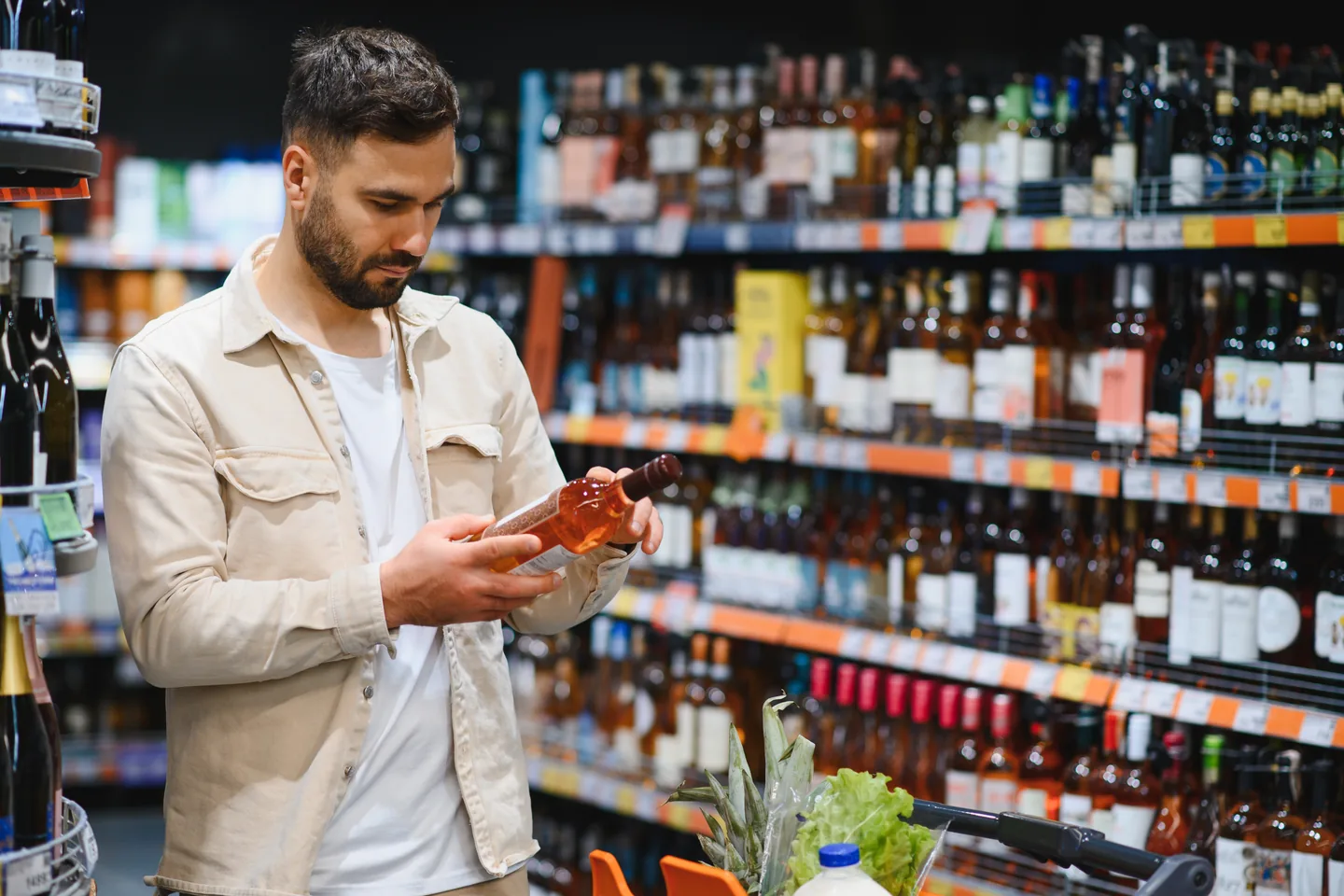
Owners ask what a policy will run before they ask what it does, and that order makes sense — the number is the part that has to fit a budget. But the cost of liquor liability insurance is not a sticker price sitting behind a form. It is an output. An underwriter reads a set of inputs about one specific store, weighs them against what that carrier has already paid out on stores that looked similar, and produces a figure that belongs to your store and to no other.
So the useful question is not what the number is. It is which inputs move it, which of those you control, and which you are stuck with because of where the store sits and what your licence permits.
What the Cost of Liquor Liability Insurance Is Priced On
Start with the thing being insured, because it is not the building. Your property policy covers the building, the coolers, the shelving and the stock. Your general liability policy covers the wet floor by the door and the display that falls on a customer. Neither of those is what a liquor liability claim is about.
A liquor liability claim reaches back to a sale. Someone bought alcohol at your register, left the premises with sealed containers, and harm followed somewhere else — on a road, in a house, at an address you have never seen. The claim asks whether the sale should have happened. That is the exposure, and it is why the pricing inputs are about transactions rather than floor area.
Once you hold that in your head, the driver list stops looking arbitrary. Every one of them is a proxy for the same question: how many sales, of what, to whom, at what hour, and how carefully.
Sales Mix Comes First
Of everything on an application, the mix is what an underwriter reads first and argues about last.
A store weighted toward spirits is not the same risk as a store weighted toward packaged beer, and the difference is not snobbery about product. It is alcohol per transaction and per dollar. A case of beer and a handle of whiskey leave the store at different price points carrying very different quantities of alcohol, and the claims that get litigated tend to trace back to the second pattern more often than the first.
Within the mix, a few sub-patterns move an underwriter more than the headline percentages ever will. Single-serve units — chilled singles pulled from a front cooler and opened within a block of the door — read differently than sealed multipacks bought for later. Fortified wine sold in small formats reads differently again. High-proof product on open shelf rather than behind the counter reads differently from the same product under staff control.
None of this means a spirits-weighted store cannot be written well. It means the underwriter is going to price the pattern that the application describes, so the pattern should be described accurately. Owners routinely understate the part of the mix they think looks bad and then wonder why the quote came back with an assumption baked in. An underwriter who cannot see the mix will assume the worse version of it, because that is the only defensible thing to do with missing information.
The Licence Class Sits Underneath the Mix
The licence is the frame the mix lives inside. It sets the outer edge of what you are permitted to sell, in what containers, at what hours, and to whom — and underwriting prices to the edge rather than to your current routine.
That distinction catches owners out. If the licence permits on-site tastings and you never hold one, the carrier still has to reckon with the permission unless the application says plainly that tastings are not held and the operation is described consistently throughout. The same goes for delivery privileges you hold but do not use, and for a class that permits later closing than you actually keep.
Licence classes are drawn by each state and they are not drawn alike, which is the honest reason a national average is close to meaningless for this line. The same storefront, the same mix and the same owner will underwrite differently across a state line because the law sitting behind the sale is different. Our state pages exist for exactly that reason — the Colorado and Texas pages carry the state-side detail that a single national page flattens into nothing.
Hours, Delivery and the Rest of the Input Set
Trading hours. The last hour a store is open does not behave like the other hours. Sales late in the evening skew toward customers who have already been drinking elsewhere, and toward the kind of judgement call at the register that ends up in a deposition. Underwriters know which hour that is without being told. If you close earlier than the licence permits, say so explicitly — it is one of the few voluntary restrictions that reads well on paper.
Delivery. Delivery converts a counter transaction into two exposures at once. There is now a vehicle on the road, which is a commercial auto question, and there is an age check happening at a doorstep rather than under a camera at a register. Both get priced. Some markets will not write delivery at all, which is a pricing input by another name.
Register discipline. Point-of-sale age verification, refusal logging, and a written policy that staff have actually signed are all cheap and all visible in the file. They do not guarantee a discount, but they change what an underwriter assumes about the sales they cannot see.
Staffing and training. A documented server-training programme for retail staff, refreshed rather than done once at hire, is one of the few things that speaks directly to the moment a claim is about.
What Moves It Less Than Owners Expect
It is worth naming the inputs that owners brace for and that turn out to carry less weight on this particular line, because bracing for the wrong thing is how a submission ends up padded with the wrong evidence.
Square footage barely registers. A tidy storefront and a scruffy one with the same mix, the same hours and the same licence will land close together, because neither the tidiness nor the floor area speaks to the sale. Age of the building matters to the property side of the package and almost not at all here. The number of registers matters mainly as a proxy for volume and staffing, not on its own.
Years in business helps, but less than owners assume and mostly through the loss history it produced. A long run of operating is only persuasive when there are loss runs to prove what happened during it. An owner who has traded for a long while under a different entity, or who bought the store and inherited the licence, is starting the evidence clock nearer to the beginning than they think — which is worth knowing before the renewal conversation rather than during it.
The Input That Is Genuinely Yours to Change
Loss history is the input owners treat as fixed and underwriters treat as the most informative thing in the file. It is fixed in the sense that you cannot rewrite last year. It is not fixed in the sense that every year you operate cleanly is a year of evidence accumulating in your favour.
Send complete loss runs. A gap in the history is read as a problem, not as an absence of one, and an underwriter filling a gap by assumption is never filling it generously. If a past claim closed without payment, or closed for a fraction of what was demanded, that is part of the story and belongs in the submission rather than being left for the carrier to discover out of context.
Why We Do Not Print a Range Here
We could put a number on this page. The trouble is that any range wide enough to be honest — a rural store with one register and early closing at one end, an urban store with delivery and a spirits-weighted mix at the other — is too wide to plan against. And any range narrow enough to be useful is only true of the store it was drawn from.
What we can do is tell you which lever your store is sitting on, before you ever fill in a form. If you have read this far and recognised your own mix, hours and licence class in it, you already know more about your pricing than a national average would have told you.
What to Send Us
Send the current declarations page, complete loss runs, your licence class, your real trading hours, and an honest description of the mix. If you deliver, say so up front. If you have a written refusal policy, attach it.
We will read it, tell you which inputs are working against you and which are already doing you favours, and go to the markets that write this class. The liquor store insurance hub sets out how the package fits together, and you can start the file any time from the quote page.
Frequently asked questions
Is liquor liability priced on square footage like my property coverage?
No. Property is priced on the building and what is inside it. Liquor liability is priced on the transaction — the sale of alcohol to a person who then leaves with it. That is why a small store with a spirits-weighted mix and late hours can price above a larger store that closes early and sells mostly packaged beer for the weekend.
Does my sales mix really change the quote that much?
It is one of the first things an underwriter looks for. Mix tells them what leaves the building and in what form. A store weighted toward spirits and single-serve units presents a different pattern than a store weighted toward cases and bottled wine, and underwriters price the pattern they can see rather than the one you describe in a sentence.
If I cannot control the licence class, why does it matter to my cost?
Because the licence sets the outer edge of what you are permitted to do, and underwriters price to the edge, not to your current habits. If the licence permits tastings, delivery or extended hours, the carrier assumes the permission may be used. Telling them you do not use it helps only when the application shows it clearly and consistently.
Will switching to a higher liquor liability limit always cost proportionally more?
No. The additional cost of each layer above the first is usually smaller than the first layer itself, because severe claims are rarer than moderate ones. That is the same reason an umbrella can be a cheaper way to reach a required limit than buying the whole amount on the underlying policy. Ask for both structures priced side by side.
Why will you not just publish a price range on this page?
A range honest enough to cover a rural single-register store and an urban store with delivery and late trading is too wide to plan against, and a narrow range is only honest for the store it was drawn from. We would rather show you which inputs move the number so you can see where your own store sits before we quote it.
About the author
