
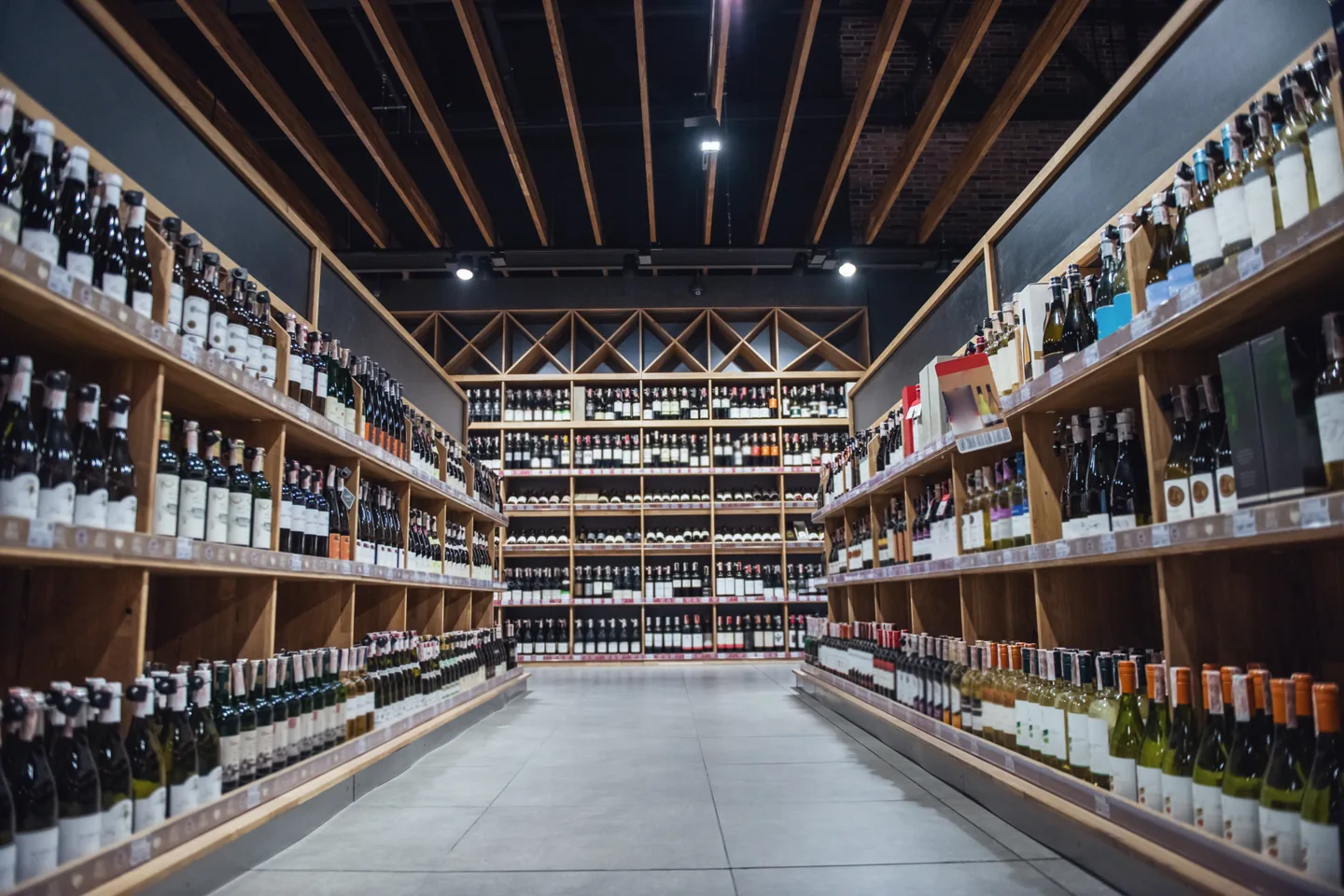
Liquor store ID check training for employees is the cheapest risk control in the trade and the one most often left to informal habit. Every other protection an owner buys — the camera system, the alarm, the policy limits, the door — responds after something has gone wrong. The person at the counter is the only control that stops it happening at all. That is why underwriters ask about it, why licensing authorities weigh it, and why it belongs in a written procedure rather than in a new hire’s memory of their induction shift.
This post covers what to train, how to document it, and the legal backdrop that makes the procedure matter beyond the till.
What liquor store ID check training for employees has to cover
Start with the trigger, because that is where informal practice fails. If the rule in a store is “check anyone who looks young,” the rule is a judgement call made by a tired employee at a busy moment, and it will be applied inconsistently. A rule that says “check every purchaser who could plausibly be below the legal purchase age, no exceptions, including people you recognise” removes the judgement from the moment and puts it into the policy where it belongs.
Then make the check itself mechanical, in a fixed order that does not vary:
Take the credential into your own hand rather than reading it through a wallet window. Check that it has not expired. Check the photograph against the face in front of you, deliberately, not as a glance. Check the date of birth against the qualifying date, and do the arithmetic on purpose rather than by feel. Look at the card itself for signs of alteration — a surface that does not match, edges that separate, printing that sits wrong under the light. Then hand it back and either complete the sale or refuse it.
Train the refusal as hard as the check. A refusal is the moment the procedure earns its keep and it is also the moment that goes wrong, because the employee is now saying no to a person who may argue. Give staff a short, neutral sentence they can use every time, tell them they never have to justify the decision, and make it explicit and repeated that management will back a refusal without question. Staff who fear being second-guessed will complete marginal sales, and no amount of policy language fixes that.
Cover the harder cases too, because they arrive: the credential that is genuine but belongs to someone else, the purchase that is obviously being made for a third party waiting outside, the customer who is already intoxicated, the group where a member stays out of sight. Each of those has a right answer and staff should have heard it before they meet it.
Why the law puts weight on the counter
The reason this procedure carries legal significance is that alcohol liability statutes are built around facts an employee at the counter can observe. Colorado’s formulation shows the structure:
“(3) (a) No licensee is civilly liable to any injured individual or his or her estate for any injury to the individual or damage to any property suffered because of the intoxication of any person due to the sale or service of any alcohol beverage to the person, except when: (I) It is proven that the licensee willfully and knowingly sold or served any alcohol beverage to the person who was under the age of twenty-one years or who was visibly intoxicated; and (II) The civil action is commenced within one year after the sale or service.”
Notice the shape. The statute begins by stating that a licensee is not civilly liable, and then carves out exceptions built on things a person behind a counter can see: age and visible intoxication.
Iowa’s statute is drafted differently and lands on a related observation:
“1. a. Subject to the limitation amount specified in paragraph ‘c’, if applicable, any third party who is not the intoxicated person who caused the injury at issue and who is injured in person or property or means of support by an intoxicated person or resulting from the intoxication of a person, has a right of action for damages actually sustained, severally or jointly against any licensee or permittee … who sold and served any alcoholic beverage directly to the intoxicated person, provided that the person was visibly intoxicated at the time of the sale or service.”
Both provisions hinge on something visible at the point of sale. That is the whole argument for training: the facts a court will later examine are facts your employee had in front of them.
These are illustrations of how such statutes are built, not a summary of the law where you trade. The standard in your state, the party who may sue and the defences available are state questions — the Colorado page, the Iowa page and the rest of the state directory are where those answers live. Do not port a formulation from one state into another.
Documenting the training so it counts
An undocumented control is, for practical purposes, an invisible one. Nobody outside the store can see a procedure that lives in a manager’s head, and the people who will eventually look — a licensing authority after an incident, an underwriter reading a submission, a lawyer building a defence — can only read what exists on paper.
Keep it proportionate. A written counter procedure of a page or so. A signed acknowledgement from each employee that they have been trained on it. A dated record of refresher sessions. A refusal log. Retained camera footage covering the point of sale, with a retention period you have actually checked rather than assumed. If your state requires a certification or seller permit, the certificates filed where you can produce them on request.
That package does several things at once. It makes the procedure real to staff, because signing something changes how people treat it. It gives a new hire a reference instead of folklore. It gives the business something to stand on if an incident ever has to be explained. And it materially improves how a submission reads.
How this reaches the policy
Liquor liability is the coverage written for the alcohol exposure specifically, and it is the policy that responds when a claim alleges that a sale contributed to someone’s injury. It sits alongside general liability, which handles the ordinary premises and operations claims that any retailer faces, and it does not overlap with it — the alcohol exposure is generally carved out of the general liability form precisely because it is meant to be underwritten on its own terms. The coverage overview sets out how the pieces fit.
When an underwriter reads a liquor retail submission, the counter procedure is one of the most informative things in it. Not because a training record prevents every incident, but because it tells them what kind of operation this is. A store with a written procedure, documented training, a refusal log and working cameras is describing a management posture. A store that answers the training question with a shrug is describing a different one.
Training also touches the employment side. Staff who are trained to refuse confidently are less likely to end up in a confrontation they were not prepared for, and confrontations at the counter are how retail employees get hurt. Workers’ compensation responds to the injury, but the training is what reduces the chance of it.
Make it a habit, not an event
The failure mode is not the absence of training. It is training that happened once, at induction, for staff who have since turned over.
Put a short refresher on a recurring schedule and keep it brief enough that it actually happens. Use real cases from your own refusal log rather than hypotheticals. Watch your own camera footage occasionally and see whether the procedure you wrote is the procedure that runs at the busy hour on a weekend. Tell staff directly that a refused sale is the outcome you want, and mean it, because the first time a manager sighs at a refusal the policy quietly stops existing.
If you want that control reflected properly in how your store is underwritten, bring the documentation into the conversation. Start a quote with the procedure, the training records and the camera detail in hand, and let them do the work they were written to do.
Frequently asked questions
Is staff training for identification checks required by law?
It depends on where you trade. Some states mandate a certification or permit for anyone who sells alcohol, some make training a mitigating factor if a violation occurs, and some leave it to the licensee. Because the requirement is set by state law and sometimes by the municipality, confirm it with the issuing authority and on the state page rather than assuming a national rule applies.
What should the counter procedure actually be?
Decide the trigger, then make it mechanical. Staff ask every purchaser who could plausibly be under the legal age, take the identification into their hand, check the expiry, check the photograph against the person, check the date of birth arithmetic deliberately rather than by eye, and refuse without negotiation if anything fails. The procedure works because it is the same every time.
Why do insurers ask about training?
Because it predicts loss. An underwriter reading a liquor retail submission is trying to understand how a sale to the wrong person gets stopped. Documented training, a written refusal policy, camera coverage at the point of sale and a record of refusals all describe a store where the control exists. The absence of those details does not mean the control is missing, but it leaves the underwriter guessing.
What is a dram shop claim?
It is a civil claim brought against a licensee by someone injured as a result of another person’s intoxication, on the theory that the licensee’s sale or service contributed to it. The standard varies by state, and the statutes commonly turn on whether the buyer was visibly intoxicated or below the legal purchase age. Liquor liability coverage is the policy that responds to this class of claim.
Should I keep a record of refused sales?
Yes, and keep it simple enough that staff actually use it. A short log of date, time of shift, reason for refusal and the initials of the employee builds evidence that the procedure runs rather than merely exists. It also surfaces patterns, such as a particular shift where refusals drop to nothing, which is usually worth a conversation.
Does a scanner replace training?
No. A scanner reads what is encoded on a card and can flag an expired or malformed credential quickly, which is genuinely useful at a busy counter. It does not confirm that the person presenting the card is the person on it, and it does not make the refusal decision. The device supports the employee; it does not substitute for the employee’s judgement.
About the author
