
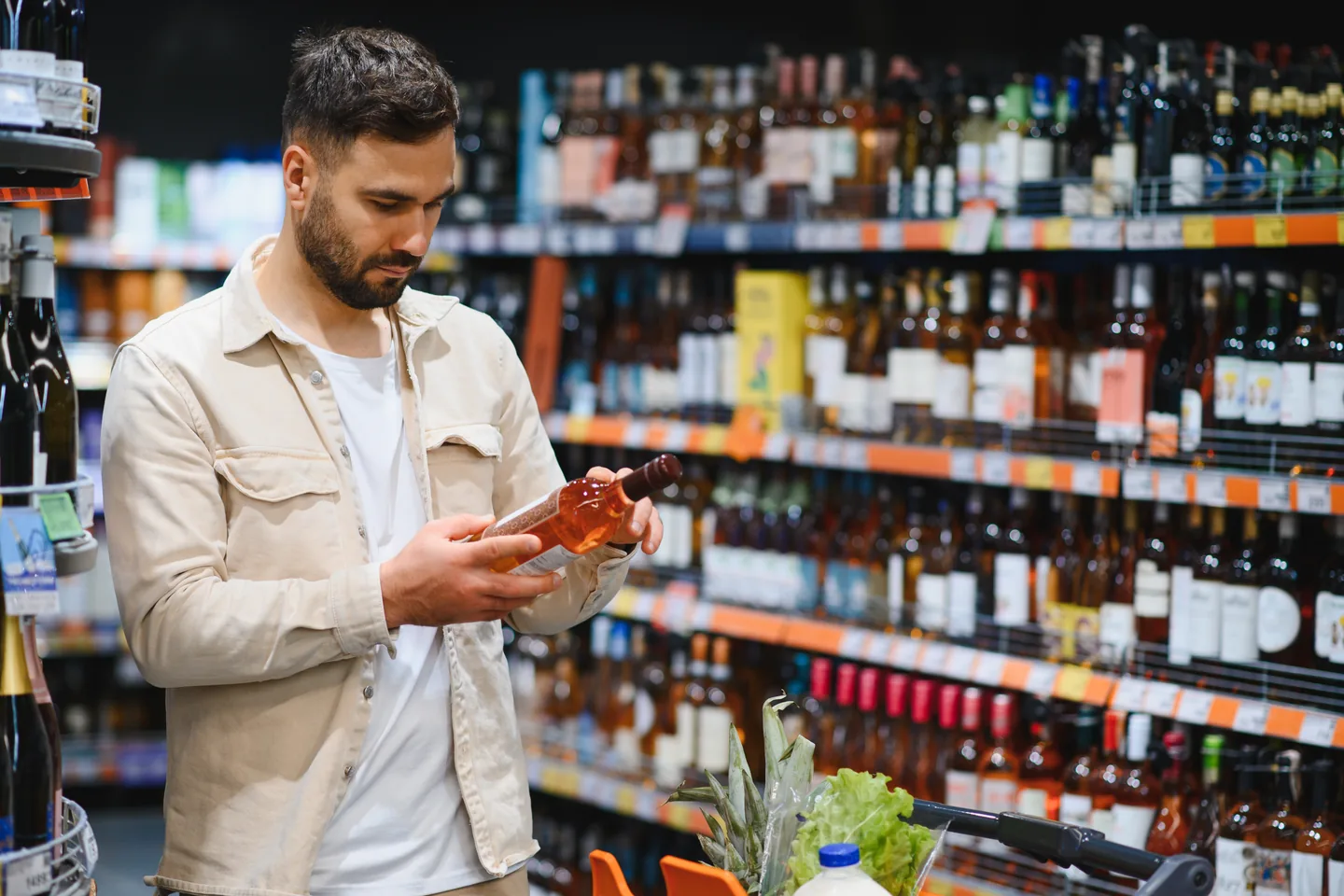
Does a liquor store need liquor liability insurance if it pours nothing? Owners put the question to us in close to those words, and the reasoning behind it is sound on its face. A package store sells sealed containers. Nobody drinks on the premises. There is no service, no long evening of watching a person work through a round, no judgement call made across a counter while somebody visibly changes in front of staff. Take all of that out of the picture and it is fair to wonder what is left to insure.
What is left is the sale. That is the whole answer, and the rest of this page is an elaboration of it.
The agreement does not attach to the act of pouring. It attaches to the act of supplying — to putting alcohol into the possession of somebody the law says must not be given any. A sealed cap does not change who supplied it. It changes only where the drinking happens, and where the drinking happens is not the first question a claimant’s lawyer asks.
The coverage follows the sale, not the pour
The vocabulary of this form was built around service, which is why it reads strangely to somebody who runs a shop. Server. Over-service. Cutting someone off. None of those words describe anything that occurs at a retail register. But words are labels on a mechanism, and the mechanism underneath them is wider than the labels are.
The covered theory is that a business supplied alcohol to somebody who ought not to have been sold any, and that harm followed. Two people are usually in view: somebody under the legal purchase age, and somebody already impaired to a degree a reasonable seller would have registered. Both of them can stand at a retail counter. One of them is more likely to be found at a retail counter than anywhere else, because a register staffed by a single clerk is a softer test than a door with a person whose only job is checking identification.
Then there is the harm, and the harm is where off-premises reasoning quietly breaks down. A claim of this kind is rarely brought by the buyer. It is brought by the person the buyer hit, or by the family of somebody who did not come home. That claimant has no relationship with your store at all, was never inside it, and is reasoning backwards from an injury to every party who touched the chain that produced it. The last commercial hand on the container is easy to identify, easy to serve and easy to describe to a jury. Whether the cap was still sealed when the container left your door is not a fact that rescues you from that sentence. It is a fact about packaging.
What the form actually does once the claim arrives — what it defends, what it pays within a limit, what it refuses outright — sits on our liquor liability coverage page, and we are not going to repeat the mechanics here. This page is about a narrower thing: whether the question belongs to you at all.
The chain above is the reason the pouring question is the wrong question. Your store occupies the first box. The claim arrives at the last one, and the two are joined by facts that happened without you.
Does a liquor store need liquor liability insurance? Some states answer that in writing
For most of this conversation the answer is a judgement about exposure. In some places it stops being a judgement, because the state has written it into the licence file and there is nothing left to weigh.
Oklahoma puts it in the list of things an applicant hands over. Title 37A of the Oklahoma Statutes, at section 37A-2-142, provides:
“§37A-2-142. Information to be furnished by license applicants. … B. Every applicant for an original license, except applicants for an employee, charitable event, special event or airline/railroad beverage license, shall also furnish the following: … 6. Proof of liability insurance covering both bodily injury and property damage.”
Read what that sentence does and does not do. It is a proof requirement attached to an original application, it excepts several licence classes by name, and it describes liability insurance covering bodily injury and property damage rather than naming a particular form. What it settles is that an applicant there is not weighing this privately. The licensing detail for the state sits on our Oklahoma page.
Rhode Island is more specific, and it names the agreement. Section 3-7-29 of Title 3 provides:
“Any applicant or holder of any retail license for the sale of alcoholic beverages…shall file with the application a certificate of insurance evidencing commercial, general-liability, and liquor-liability and property-damage coverage in the minimum amount of three hundred thousand dollars ($300,000).”
That sentence deserves a second reading if you have been treating the two agreements as alternatives. It asks for general liability and liquor liability together, and it asks for them of a retail licence holder — not only of a place that serves across a counter. The state detail sits on our Rhode Island page.
We quote those two because we can quote them exactly, and we do not stretch either one past its own border. Requirements in this field are written state by state, and the only safe method is to read your own.
What your retail liability policy has already decided
Here is the part that surprises owners most, and it has nothing to do with which state you are in.
The liability policy written for a retail business — the one that answers for the shopper who goes down in an aisle, the display that shifts, the cart that finds a fender in the lot — contains wording that removes claims arising from a business having caused or contributed to somebody’s intoxication, or from supplying alcohol to a minor or to a person already impaired. For a shoe shop, that wording is invisible. It removes an exposure the shoe shop does not have.
For a store whose entire inventory sits on the far side of that wording, it removes the single exposure that exists because of what you sell. That is not an oversight or a drafting accident. It is a deliberate division of labour between two contracts, and what the retail form keeps hold of is set out on our general liability page.
The practical consequence is blunt. You cannot answer this question by pointing at a policy you already hold, because that policy has already answered it in the negative, on purpose. If the exposure is going to be insured, it is insured by buying the second agreement.
The answer moves with how your store actually runs
Two stores on the same street can sit very differently against this, and what moves them is not square footage or sales volume.
Handing product over away from the counter. Delivery and curbside move the identification check into a doorway or a car window, performed quickly by a person holding a phone, frequently after dark. The obligation is no lighter for being awkward to perform. If you have added a handoff away from the register, you have changed the shape of the exposure and the underwriter needs to hear it from you rather than discover it in a claim file.
Anything consumed on the premises. Sampling, a tasting counter, a container opened for an event — each of these creates an on-premises fact pattern inside a business defined by off-premises consumption. That mismatch is worth raising before it is tested.
Who is at the register late. The identification check is usually performed by the least experienced person on the schedule, working alone, at the hour when the test is hardest to pass. Every control you run — a prompt on the terminal, a written refusal log, a second pair of eyes — is also the evidence somebody will eventually ask to see.
Whether anything else can be named. A claimant looking for a defendant names everybody reachable. A store without the second agreement is not a store with a smaller claim. It is a store paying for its own defence out of the till.
What an absence of requirement does not mean
Where a state does not demand proof of this cover as a licensing condition, nothing follows about whether a claim can be brought against you. A licensing statute and a liability statute are different instruments doing different jobs. The first governs whether you may open the doors. The second governs who may sue you afterwards and on what theory. A state can be quiet on the first and busy on the second, and the quiet one is the one that appears on your renewal paperwork.
This is also the point where limits enter the conversation, because the question after “do I need it” is almost always “is the limit enough”, and those are separate decisions with separate answers. An umbrella sits above the underlying agreements rather than replacing either of them.
Settling it for your own store
Bring three things to the conversation. Your licence class and what it permits. A plain description of everything that happens with the product other than a sealed sale at your counter. And your current declarations page, so the wording that has already been removed can be read rather than assumed.
If you want to see how the agreements fit together before you get into any of that, the liquor store insurance overview lays out the package as a whole. When you are ready to price it against the way your store actually operates, start a quote and we will read the forms alongside you.
Frequently asked questions
Does a liquor store need liquor liability insurance if nobody drinks on site?
Off-premises consumption does not remove the exposure, because the covered theory is supplying alcohol to someone who should not have received it. The claimant is usually a third party injured elsewhere, and the store is the last commercial hand on the container. Sealed packaging changes where the drinking happened, not who sold it.
Is liquor liability the same thing as general liability?
No. They are separate agreements bought separately. The retail liability policy answers for ordinary accidents on your premises and in your operations, and it contains wording that removes claims arising from alcohol being supplied to the wrong person. Liquor liability is the distinct form written to answer that removed theory.
Which states require a liquor store to carry liquor liability insurance?
Requirements are set state by state and belong in your licence file rather than in a general rule. Oklahoma requires licence applicants to furnish proof of liability insurance covering bodily injury and property damage. Rhode Island requires a retail licence applicant to file a certificate evidencing general-liability, liquor-liability and property-damage coverage. Check your own state before assuming.
Will liquor liability pay a fine after a failed compliance check?
No. A penalty imposed on your store by a licensing authority is an enforcement action against you, not a third party claiming bodily injury, so no liability form is built to pay it. The civil claim and the regulatory proceeding are separate matters with separate standards, and the policy answers only the first.
Does adding delivery or curbside change whether a store needs the cover?
It changes the shape of the exposure rather than the answer. Once product is handed over away from your counter, the identification check happens in a doorway or a car window, performed quickly and often after dark. Tell the underwriter, because a policy written on a store that does not deliver responds badly to a delivery claim.
About the author
