
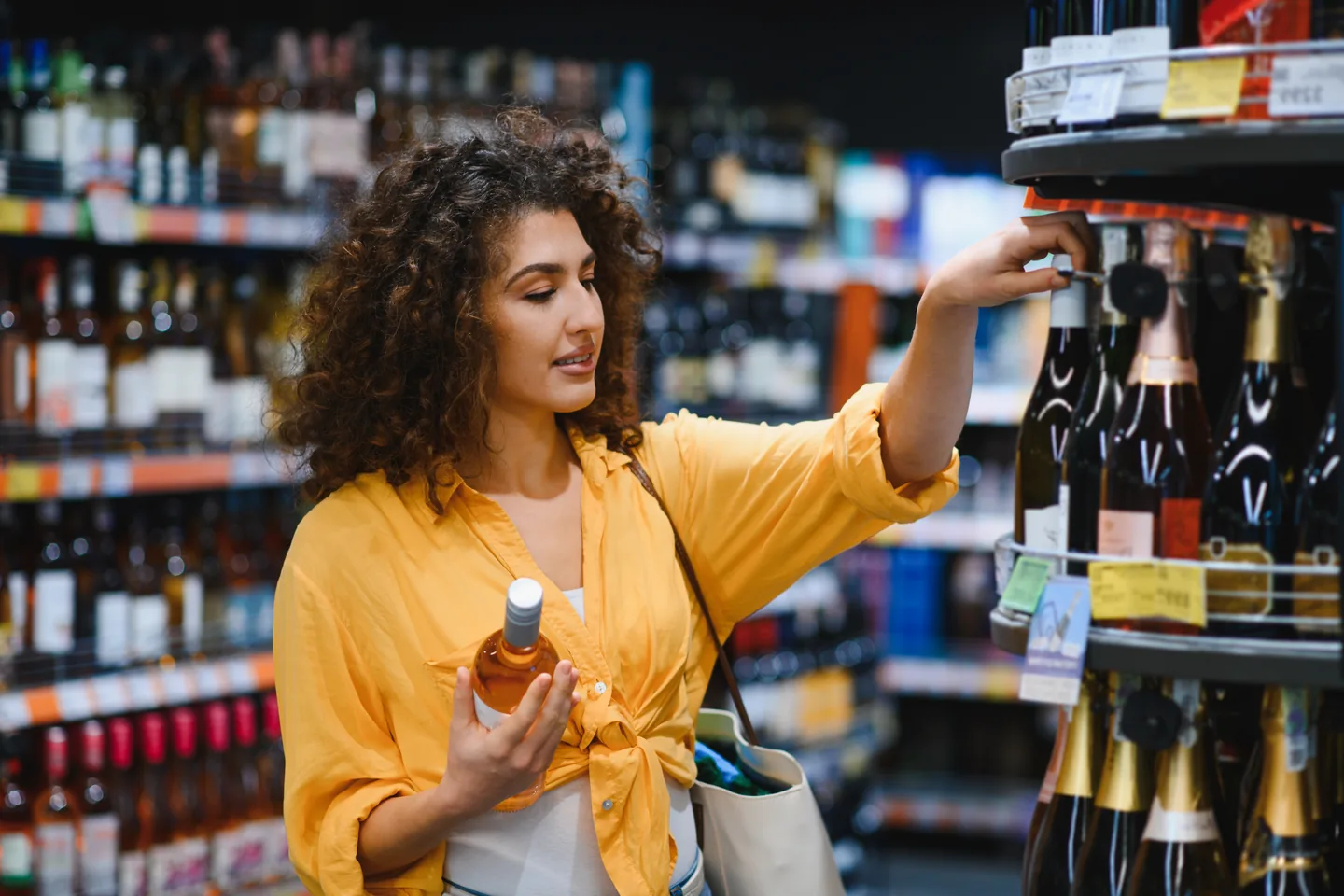
Liquor store delivery is the fastest-moving part of this trade, and it is the part where an owner’s existing insurance is most likely to be quietly wrong. Adding delivery is not an extension of retail. It moves the point of sale off your premises, puts a vehicle and a driver into your operation, and takes the verification that used to happen under your cameras out to a doorstep where nobody is watching.
None of that makes delivery a bad idea. It makes it a different business activity bolted onto the one you already run, and the sequence in which you settle the questions matters: the licence, then the vehicles, then the handoff.
What liquor store delivery changes first
The first thing it changes is where the sale happens, and that is a legal fact rather than a logistical one.
Everything your counter procedure is built to do — confirm the buyer is of legal age, judge whether they are visibly intoxicated, refuse cleanly when either test fails — has to happen again at the door, performed by someone who is alone, in a hurry, and without a manager nearby. If the verification does not travel with the bottle, you have not added a channel. You have added an unsupervised sale.
The second thing it changes is what your business physically does. A store that delivers operates vehicles, and vehicles generate the largest single-incident losses a small retailer is likely to face. That exposure does not belong to the alcohol policy at all, which is why delivery is the feature that splits across policies that were never written to work together.
The licence question comes before the logistics
Before buying a vehicle or signing with a platform, establish whether the licence you hold permits delivery at all, and on what terms.
Licence classes are drafted with specific authorised activities, and some name delivery directly. Kentucky’s quota retail package licence is an example of a class that addresses the subject in the statute itself:
“243.240 Business authorized by quota retail package license — Delivery of alcoholic beverages purchased on premises by consumers. (1) A quota retail package license shall authorize the licensee to: (a) Purchase, receive, possess, and sell distilled spirits and wine at retail in unbroken packages only, and only for consumption off the licensed premises”
The point to take from that is structural, not geographic: delivery is the sort of thing a state addresses inside the definition of a licence class, which means the answer for your store is found in your licence class rather than in general industry practice. What Kentucky authorises tells you nothing about what your state authorises. The Kentucky page and the rest of the state directory are where the per-state answer lives.
Ask the issuing authority the specific questions: whether delivery is permitted under the class you hold, whether a separate permit or endorsement is required, whether there are restrictions on product type, hours, distance or destination, what verification is required at the point of handoff, and what records you are expected to keep. Get the answers before you spend money, because a vehicle bought for a service you are not permitted to run is an expensive lesson.
States can attach insurance conditions to the permit itself
Here is a detail that is easy to miss: in some states the insurance is not a commercial decision you make afterwards. It is a condition of getting the permission at all.
New Mexico’s legislation, addressing third-party alcohol delivery, illustrates the mechanism plainly:
“H. The department, by rule, shall create a third-party alcohol delivery permit and, at a minimum, condition the issuance of a third-party alcohol delivery permit on: … (2) requiring proof of general liability insurance coverage with a liquor liability endorsement in an amount not less than one million dollars ($1,000,000) per occurrence, which endorsement shall provide coverage for employees or independent contractors of the third-party alcohol delivery service.”
Read what that provision is doing. It names a coverage type, requires an endorsement, sets a limit as a floor, and specifies who the endorsement has to cover — including independent contractors, which is the detail that catches operations built on drivers who are not employees.
That is New Mexico’s rule for that permit. It is not a national standard, it does not describe what any other state requires, and it should not be used as a benchmark for your own limits. The value of reading it is understanding that a delivery permit can carry insurance conditions with real specificity, so “we already have liability coverage” may not be a sufficient answer. The New Mexico page carries that state’s detail; your state has its own.
Where the exposure actually sits
Once delivery is running, the risk stops being a single thing. Follow a delivery from shelf to doorstep and you can see it move between policies.
While the order is picked and packed in the store, the exposure is ordinary premises and operations risk — the same general liability exposure that covers a customer slipping in the aisle, plus the stock itself under property cover.
The moment the product is in a vehicle, the dominant exposure is driving. A collision on the way to a delivery is an auto claim, and the sums involved when a vehicle injures someone dwarf most retail losses. This is commercial auto territory, and it is where owners get caught. A personal auto policy on an employee’s own car was not written for business use. A business auto policy written before you started delivering may not contemplate the vehicles or the drivers you now use. If staff use their own cars, hired and non-owned exposure needs arranging deliberately rather than hoped for.
At the door, the exposure becomes alcohol-specific again. This is a sale, and if it is made to someone below the legal purchase age or visibly intoxicated, it is exactly the fact pattern liquor liability exists for — except that it happened away from your premises, with no camera and no second opinion.
Separate legs of the same trip, sitting in different parts of the programme. The coverage overview sets out how those parts are meant to interlock; the thing to avoid is assuming that because you have all of them, they have all been told about delivery.
The handoff is the part to design carefully
Everything else in a delivery operation is logistics. The handoff is the risk.
Write the doorstep procedure down and train it the same way you train the counter. The driver checks the credential in hand, checks the photograph against the person, checks the date of birth deliberately, and confirms that the person receiving it is the person who ordered where your process requires that. The driver assesses whether the recipient is visibly intoxicated. If anything fails, the driver leaves with the product — no negotiation, no exceptions, no leaving it on a step.
Make refusal safe. A driver who believes a refused delivery counts against them will complete marginal handoffs, and that single incentive undoes the whole procedure. Say plainly that a returned order is the right outcome and treat it that way.
Then build the record. Capture the verification in whatever your system supports, log refusals, and keep the record long enough to be useful. A delivery with no evidence of verification is indistinguishable, after the fact, from a delivery where nobody checked.
Third-party platforms deserve their own review
Handing deliveries to an outside service changes the shape of the risk rather than removing it. The driving exposure moves, but the sale is still yours, and questions arise about who holds which permit, who is responsible for verification at the door, what the agreement says about indemnity and hold-harmless, whether you are named on the platform’s coverage, and what happens when a claim involves your product, their driver and your licence.
Read the insurance and indemnity provisions before signing, and have someone read them who reads policies for a living. The New Mexico provision quoted above is a useful reminder that regulators are actively thinking about third-party delivery and about who carries coverage for contractors — so the contract question and the permit question are connected.
Before the first order goes out
Confirm what your licence permits and what permit a delivery service requires. Tell your agent the operation is changing, with specifics: which vehicles, which drivers, whose cars, what hours, what area, employees or contractors. Get the auto exposure arranged before a vehicle carries a paid order rather than after. Write the doorstep procedure and train it. Decide how verification is recorded.
Then run it as a real part of the business rather than a side experiment, because the licence does not treat it as a side experiment. When you are ready to have the coverage side looked at properly, start a quote and describe the delivery operation as it will actually run.
Frequently asked questions
Can a liquor store deliver alcohol?
Sometimes, and the answer belongs to the state and often to the municipality. Delivery may be permitted under your existing retail licence, permitted only with an additional permit or endorsement, restricted to certain product types or hours, or not permitted at all. Because the authority is the one that issued your licence, confirm it there before you commit to vehicles, staff or a platform contract.
Does my business auto policy cover deliveries?
Not necessarily, and this is the assumption that causes trouble. Coverage depends on who owns the vehicle, who is driving, whether the use was disclosed, and whether delivery was contemplated when the policy was written. Personal policies on employee-owned cars are a particular problem area. Tell your agent that you are delivering before the service starts, not after an accident.
What happens if a driver delivers to someone underage?
The store is generally the licensee, which means the consequences reach the licence as well as the driver. A delivery is still a sale, so the verification that happens at the counter has to happen at the door, by a person who has been trained and who is willing to refuse. Treat the doorstep as an extension of the counter, because that is what it is legally.
Is using a third-party delivery app safer than delivering myself?
It is different, not automatically safer. Using a platform shifts the driving exposure but raises questions about who holds which permit, who verifies age at the door, what the contract says about indemnity, and whether the platform’s own coverage responds to a claim involving your sale. Read the agreement and the insurance provisions carefully before signing.
What coverage does a delivering liquor store need?
Broadly, the alcohol exposure stays with liquor liability, the premises and operations exposure stays with general liability, and the driving exposure needs commercial auto arranged for the vehicles and drivers actually used. Hired and non-owned exposure matters when staff use their own cars. The right structure depends on how the deliveries are run, so describe the operation accurately when you apply.
Can a state require me to carry a specific amount of coverage to deliver?
Yes. Some states attach insurance conditions directly to a delivery permit, specifying the type of coverage and a minimum limit as a condition of issuance. Those requirements are set by statute or rule in each state and they do not transfer across state lines, so check what applies where you trade before assuming your existing limits satisfy it.
About the author
